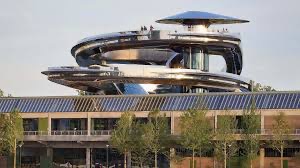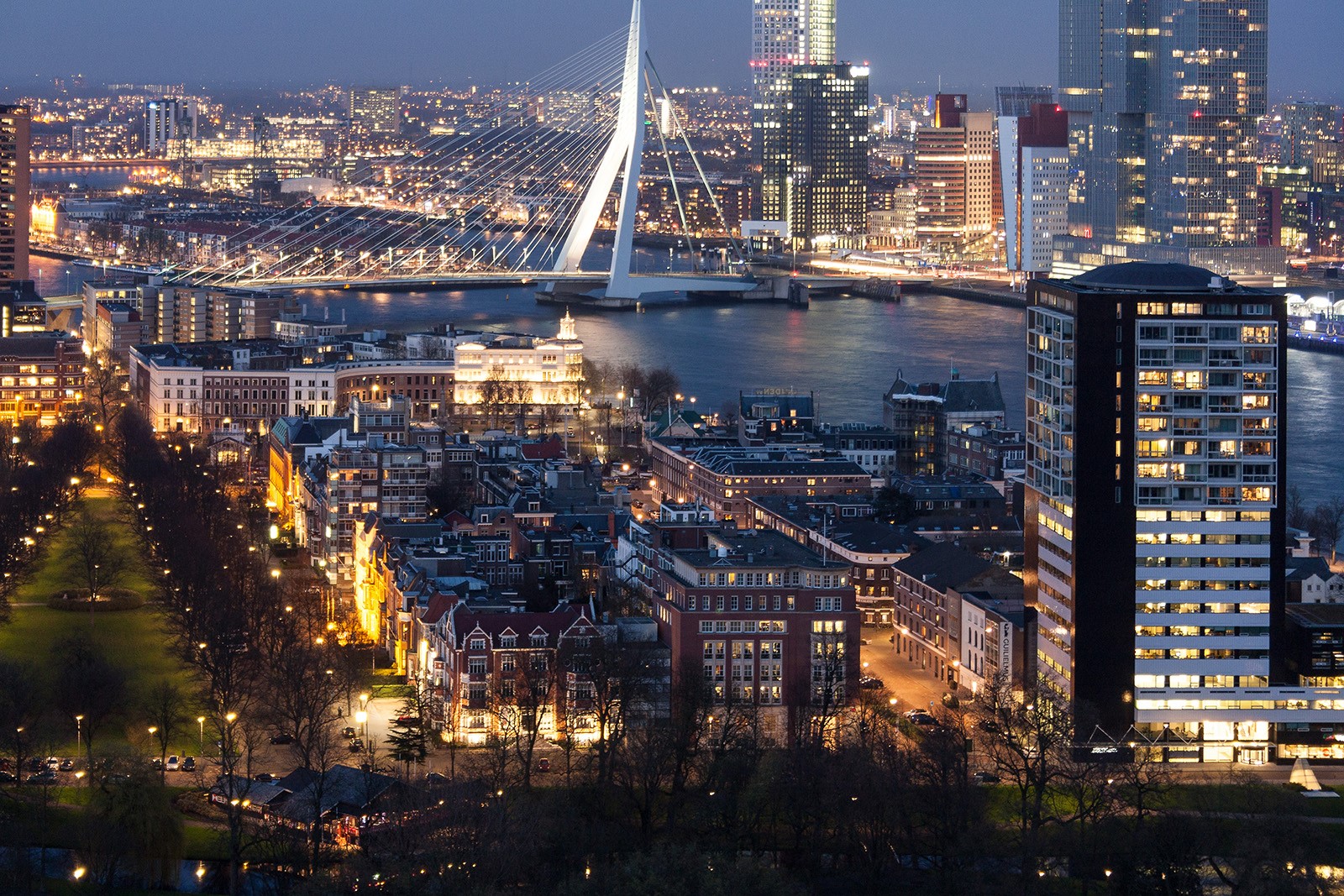
Rotterdam skyline
Codarts University of the Arts: Global Musics

The Ask:
Why Rotterdam? Why Now?

Rotterdam carries extraordinary Global Musics traditions: Turkish, Kurdish, Surinamese, Antillean, Brazilian, Cuban, Moroccan, and more. This city has communities who have been playing, teaching, and passing these musics on for generations. The ask is simple: should a world-class conservatoire in a world port city take that seriously? We believe the answer is yes, and this is the case we are building.

The City This Work Is Built For

Rotterdam is not a homogeneous European city with a multicultural programme. It is a genuinely plural city where Global Musics traditions are not minority interests: they are the living culture of the majority.

174
Languages spoken in Rotterdam. More than in any other city in the Netherlands.
>50%
Of Rotterdam residents have a migration background: the highest proportion of any major Dutch city.
45K+
Residents with Turkish and Kurdish heritage in Rotterdam and the wider South Holland region.
UNESCO
Rotterdam Unlimited: the Caribbean carnival running since 1984: is recognised as UNESCO Intangible Cultural Heritage.

In no other European city does a conservatoire sit this close to living Global Musics traditions practiced at this scale. Codarts does not need to go out into the world to find these traditions. They are already here, on the same streets, in the same neighbourhoods, two tram stops from the front door.

A Small Team, a Wider City

This is not a Codarts institutional project. It is a project being driven by a few people at Codarts who believe in it, working in close collaboration with community organisers, artists, cultural partners, and organisations across Rotterdam. The conservatoire provides the platform and the educational credibility. The city provides the people, the traditions, and the reason this matters.

How it works in practice: A small internal team from the Global Musics department at Codarts is the initiating group. We do not act alone. Every significant decision is made in partnership with community leaders, artists, and the organisations already doing this work in Rotterdam. Codarts is a catalyst and a support structure, not an authority over what happens.

The Gap

No Anchor Organisation

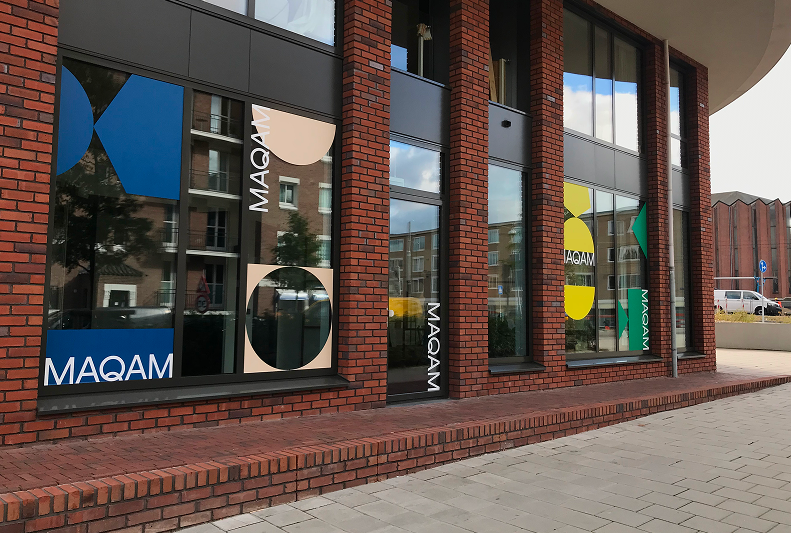
Amsterdam has MAQAM, the Andalus Orkest, and the Ud Festival. Ghent has De Centrale. Rotterdam has dispersed talent without a connecting thread. That is what we are building toward changing.
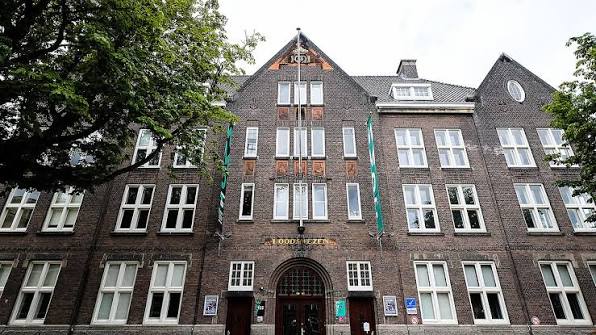
World Music and Dance Centre, Codarts Rotterdam

The Starting Point

Codarts Provides the Ground

Codarts brings the World Music and Dance Centre (WMDC), an international student body, a decolonial curriculum, and existing partnerships with Fenix Museum, Cultuur and Campus, and Orkest Partout. This is the foundation, not the finished building.

The Destination

An Independent Organisation for the City

The end goal is a Stichting or equivalent independent entity: not part of Codarts, not controlled by any one partner, but owned collectively by the communities it serves. Codarts starts the process and then steps back as the community steps forward.

The People Starting This

A small team, from inside and outside Codarts. This is how it begins. From here we build slowly, together with the city.
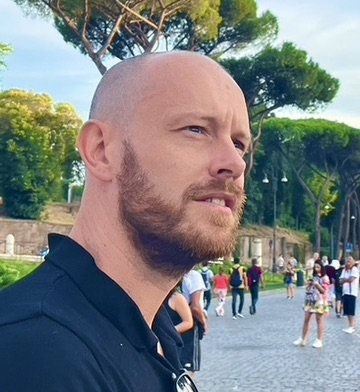
Head, Global Musics

Jan Kuhr

Head of the Global Musics department at Codarts Rotterdam. Responsible for the educational and strategic direction of the department, the curricula change, and the wider city vision for Rotterdam. The initiating force behind this project.

Codarts
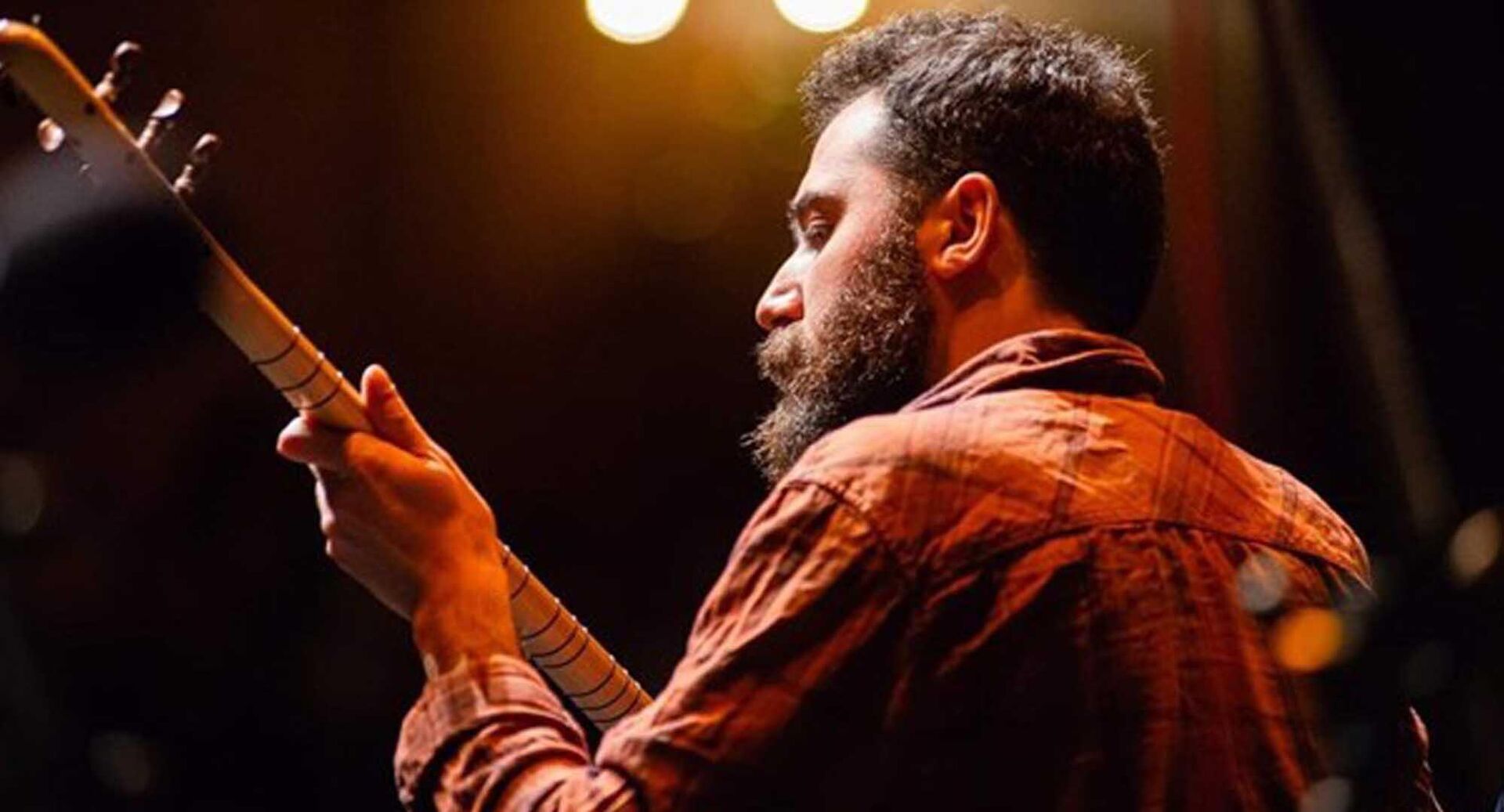
Mutlu Kizilgedik

Coordinator Silk Roads, Codarts

Mutlu Kizilgedik

Mutlu is a bağlama teacher and tradition-bearer who grew up deeply embedded in Kurdish and Anatolian music. He did not learn this tradition in a classroom: he grew up inside it. Today he lives as part of the Turkish and Kurdish community within Rotterdam and the Netherlands, which means his teaching carries the full context of where the music lives. At Codarts he coordinates the Silk Roads specialisation. In the community, he is already trusted. That trust is not transferable from an institution. It has to be earned, and Mutlu has earned it.

Codarts
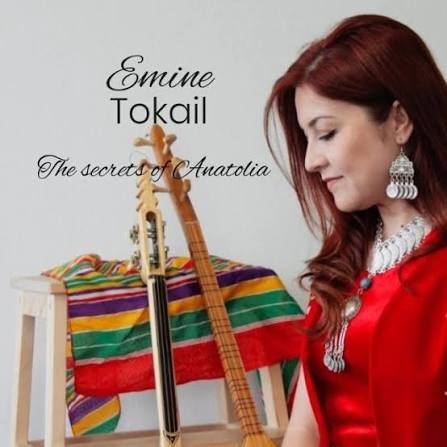
Emine Tokali

Vocalist and Education Pioneer

Emine Tokali

Emine is a Dutch-Turkish vocalist based in Rotterdam, working deeply within the Turkish and Kurdish musical tradition. Her art lives in the voice. Beyond performance, Emine has built heritage-based music education within Rotterdam: working with communities to pass on Turkish vocal tradition in ways that are culturally grounded, intergenerationally connected, and genuinely embedded in the city. She is not a Codarts employee. She is a partner, and that distinction matters: what she does in the community she does as a community member, not as an institutional representative.

Community Partner

From here we build. These three are the starting point, not the full picture. As the work grows, the team grows: with community musicians, partner organisations, and the expertise that already exists in Rotterdam but has not yet been connected. No single institution holds all the knowledge needed. That is exactly the point.

The 10-Year Picture

This is a long game. The decisions made in 2026 are the seeds of something that will take a decade to fully root. Here is what we are building toward.

By 2031 (5 Years)

  • +An independent Stichting is operational with its own board, community governance, and mixed funding streams
  • +Rotterdam Bağlama Festival is an established annual event known across the Netherlands
  • +Caribbean and South American strand has its own programming led by community partners
  • +Erasmus+ BIP running annually with 4 to 6 European partner institutions
  • +Rotterdam visible as a European Global Musics city alongside Amsterdam and Ghent

By 2036 (10 Years)

  • +A permanent community music centre with teaching, rehearsal, and performance space, not controlled by any single institution
  • +Children from Rotterdam's Turkish, Surinamese, and Antillean communities follow a continuous pathway: from community workshops through the Codarts Lyceum pre-professional programme to conservatoire entry. The Lyceum is the bridge that the pathway has always lacked.
  • +Codarts is one partner among many: the organisation runs without Codarts being in the room
  • +Rotterdam's Global Musics traditions are documented, taught, researched, and celebrated: by the communities themselves
  • +The model is studied and replicated by other cities
In ten years, the measure of success is not what Codarts built. It is what the communities of Rotterdam built, with Codarts having made the first steps possible.

A Distributed Network with an Independent Core

The network connects existing organisations, venues, and communities. At the centre is not Codarts but the future Stichting: an independent body that holds the network together without being owned by any single institution.

Independent
Stichting
(future)
Codarts / WMDC (Educational anchor)
Fenix Museum of Migration
Cultuur and Campus
Orkest Partout
Stichting Saz Rotterdam
Culture Connection
Grounds Rotterdam
EPM Holanda
Caribbean Ancestry Club
Rotterdam Unlimited
Bağlama Festival
Erasmus+ European Partners

What Guides Every Decision

01
Community before programming. Build relationships first. Events follow naturally from trust, not from planning documents.
02
Artists lead. Musicians and community members are co-designers and decision-makers, not content for our programme.
03
Independence is the goal. We build toward an organisation that does not need Codarts to function.
04
Slow growth. Year one is listening and pilots. Sustainable infrastructure takes five to ten years.

Rotterdam's Political History and Why It Matters for This Work

To understand why building Global Musics infrastructure in Rotterdam requires serious strategic thinking, you need to understand what this city has been through politically. This is not background information. It is the reason this project is harder here than in Amsterdam or Ghent, and the reason it is also more necessary.

The Assimilation Model and What It Did to Culture

For most of the late 20th century, Dutch policy toward immigrant communities was built around a concept called inburgering: civic integration. The model was explicit: newcomers were expected to learn Dutch, demonstrate Dutch values, and gradually become culturally Dutch. The assumption was that cultural differences would fade over time. Communities would assimilate. Their music, their language, their traditions would give way to a shared Dutch identity.

Under this model, cultural programming for immigrant communities was not funded as art. It was funded as welfare, or as integration support. A Kaseko concert was a "community event." A bağlama workshop was "outreach work." The implicit message: these traditions are transitional. Useful for helping communities settle, but not permanent, not serious, and certainly not deserving of the same institutional investment as Dutch and Western classical culture. The conservatoires, the major museums, the big funding streams: these stayed European in their framing, with the occasional Global Musics programme added as proof of openness.

The traditions did not fade. They grew. Second and third-generation communities rediscovered and deepened their connections to heritage music. Surinamese Kaseko, Turkish Bağlama, Moroccan Gnawa and Chaabi: all alive and practiced in Rotterdam today. But the funding structures never caught up with that reality. The categories built under the assimilation model are still largely in place.

Leefbaar Rotterdam: The Turn Against Multiculturalism

In March 2002, Leefbaar Rotterdam: the party founded by Pim Fortuyn: won 35 of 45 seats in the Rotterdam city council. It remains one of the most dramatic results in Dutch local political history. Fortuyn's core argument was that mass immigration, particularly from Muslim-majority countries, was incompatible with Dutch liberal values. He did not use the language of biological racism, but of cultural incompatibility. The effect was the same: diversity was positioned as a problem to be managed, not a strength to be invested in.

Fortuyn was assassinated two months later, but Leefbaar Rotterdam continued as a major political force throughout the 2000s and 2010s. The political framing it established: diversity as challenge, integration as obligation, culture as welfare: shaped how Rotterdam invested in multicultural cultural infrastructure for a generation. The contrast with Amsterdam was sharp: Amsterdam maintained progressive multicultural funding. MAQAM Centre, the Andalus Orkest, and the Ud Festival developed in Amsterdam, not Rotterdam. That is not a coincidence. It is a consequence of political choices made over two decades.

In 2006, Rotterdam further pioneered the Rotterdamwet: national legislation allowing municipalities to restrict incoming residents without employment income from moving into designated deprived neighbourhoods. The law targeted precisely the areas: Rotterdam-Zuid, Delfshaven, West-Kruiskade: where Turkish, Surinamese, and Moroccan communities had built their cultural life. Whether framed as urban policy or not, the message landed clearly: the cultural concentration of these communities in specific areas was a problem to disperse, not a richness to invest in.

Diversity was never the problem in Rotterdam. It was the solution to a city bombed flat in 1940 and rebuilt by the labour of people from across the world. The music those communities brought with them is part of what Rotterdam is.

Rotterdam in 2026: Changed, But Not Transformed

Rotterdam's political climate has shifted. The city now has a more diverse governing coalition. Rotterdam markets itself internationally as a global, dynamic, diverse port city. The diversity is genuine. Rotterdam Unlimited: the Caribbean carnival running since 1984, now UNESCO Intangible Cultural Heritage: is a genuine expression of what the city is. The Fenix Museum of Migration has opened in Katendrecht. Codarts has launched Global Musics with a decolonial curriculum. Things are moving.

But institutional change moves slower than political marketing. The public funding available for Global Musics, diaspora arts, and non-Western cultural programming is still modest compared to funding for Western classical and contemporary arts. The cultural sector in Rotterdam has more capacity for events than for infrastructure. Events get funded. Long-term institutional investment does not. The framing problem persists: if you apply for a Kaseko workshop, do you call it integration work (welfare budget) or performing arts (culture budget)? That question is not semantic. It determines which pot of money you apply to, whether the work is seen as temporary or permanent, and whether you are treated as a cultural producer or a social worker.

What Makes Rotterdam Worth Fighting For

Rotterdam's strength has always been its international character. The port made Rotterdam global before anyone planned it that way. The communities that settled here over 70 years brought with them musical traditions of extraordinary richness. The Surinamese world alone spans Afro-Caribbean percussion (Kaseko, Kawina), Hindustani classical music (Baithak Gana), Javanese gamelan, and Creole popular music: each a complete musical system shaped by a layered, difficult, and remarkable history. The Turkish and Kurdish communities carry one of the world's great modal music traditions, rooted in thousands of years of Silk Road exchange. The Moroccan communities bring Chaabi, Gnawa, and Andalusian classical forms. The Antillean communities bring Tumba and Dande, now UNESCO heritage.

These traditions have survived colonialism, the Middle Passage, forced displacement, and generations of being told they were not serious enough to deserve a conservatoire. They did not need us to survive. But they deserve, and the city deserves, a moment where they are fully recognised: not as cultural add-ons to a European core, but as the musical backbone of what Rotterdam actually is. That is the ask. That is why now.

The Argument We Are Not Making

We are not saying "these communities need support." That welfare framing has done enough damage. It has kept these traditions in social budgets rather than arts budgets, and it has positioned communities as recipients of institutional goodwill rather than as holders of musical knowledge. The argument here is artistic, educational, and strategic: these traditions are musically excellent, they are practiced right here in Rotterdam, and a world-class conservatoire in a world port city has both a responsibility and a rare opportunity to engage with them at the highest level. This is not charity. This is what Codarts is for.

The Institutional Tension

Codarts is a conservatoire. Its role is educational, not cultural programming. The boundary between institutional support and community ownership must be actively managed at every step. If Codarts takes too central a role, it risks repeating exactly the pattern it is trying to disrupt: another institution deciding what the community's culture should look like. The answer is structure: a Stichting with community governance, co-design at every stage, and a clear timeline for Codarts stepping back as the community steps forward.

The Funding Constraint

Codarts, as a structural subsidy recipient from the Dutch government, cannot apply for Rotterdam Projectsubsidies Cultuur directly. That means the single largest municipal funding stream for independent cultural projects is closed to us. A separate Stichting must be formed and must build its own track record before accessing these funds. This adds legal and administrative complexity in year one, but it is also the right structure for long-term community ownership. The constraint is also a gift: it forces us to build the independent organisation rather than keeping everything inside Codarts.

Get in Touch

Jan Kuhr, Head of Global Musics, Codarts University of the Arts Rotterdam.
If you are reading this as a Codarts colleague, a potential funder, a community partner, or someone who wants to be part of this: please reach out. This work grows through conversation, and every conversation matters.
jkuhr@codarts.nl

Codarts colleagues

We need institutional support: mandate, budget line, and the understanding that this work moves at the pace of community trust, not the pace of project timelines.

Funders

We need investment in the Stichting and its first cycle. The Bağlama Festival in October 2026 is the first concrete ask. The longer-term ask is the infrastructure community music in Rotterdam has never had.

Community partners

We want to hear what you need, not tell you what we plan. The first conversation is a listening conversation. Nothing is designed without you in the room.

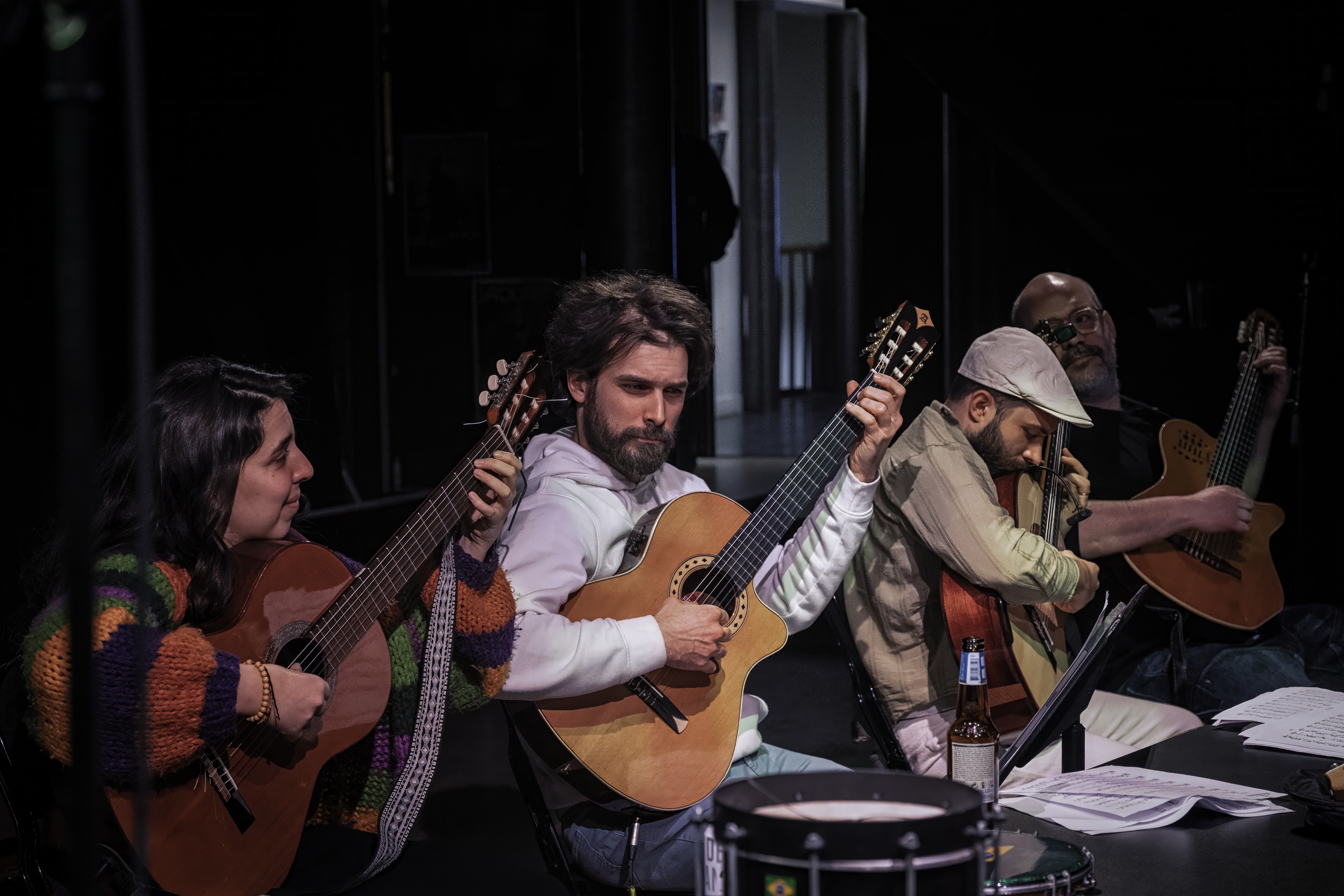
WMDC Codarts
Why Codarts

The Educational Mandate
and the Strategic Fit

Codarts is not stepping into community work as charity. This is the natural extension of who we already are and what our new curriculum demands.

Two New Specialisations That Change Everything

Starting academic year 2025/2026, Codarts Global Musics offers two dedicated specialisation pathways. These are not bolt-ons. They are the structural recognition that this music deserves full conservatoire depth: as living traditions, as subjects of serious artistic research, and as the musical heritage of communities right here in Rotterdam.

Bağlama musician

Specialisation One

Maqam and Modal Traditions along the Silk Roads

A specialisation spanning the living classical urban musics and folk musics of the Silk Road: Arabic, Turkish, Persian, Kurdish, and Anatolian traditions. Instruments include Oud, Bağlama (saz), Qanun, Ney, and voice in maqam traditions. Students engage with maqam as both theoretical system and lived improvisation practice, studying oral transmission alongside composition and Audio Production for contemporary contexts. Anatolian folk music, classical Ottoman makam, and Arabic maqam are treated as distinct but related branches of the same deep musical world.

Oud Bağlama / Saz Qanun Ney Maqam Voice Anatolian Folk Composition Audio Production
Caribbean and South American music

Specialisation Two

Afro-Caribbean and South American Music

Traditions from the Caribbean, Brazil, Cuba, Suriname, and beyond. Focus on rhythm, percussion, voice, strings, and the diasporic relationships between African, Indigenous, and European musical elements. Students engage with Kaseko, Tumba, Samba, Rumba, and Son Cubano as living creative systems, not as folk curiosities. Composition and Audio Production are integrated alongside performance and pedagogy. Deeply grounded in Rotterdam's own community demographics and cultural history.

Kaseko / Kawina Samba Salsa / Son Tumba Rumba Composition Audio Production

Curriculum principle: Both specialisations connect music practice to community, history, and living tradition. Students are not only trained as performers: they are educated as stewards, teachers, and bridges between the tradition and the world around them.

Everyone Who Loves These Musics Is Welcome

This is one of the things that makes Codarts Global Musics genuinely different. Our students come from everywhere, and that mix is the point.

Students from Turkey, Morocco, Egypt, Iraq, Kurdistan, Suriname, Brazil, Cuba, Aruba, and across the Caribbean study here. They bring with them the living traditions of their families and communities, and they bring the depth of knowledge that comes from growing up inside a musical world.

Alongside them study Dutch students from Rotterdam, Amsterdam, and across the Netherlands. German students. Spanish students. Greek students. Belgian students. Students from across Europe who have heard these musics and been drawn to them, who have spent years learning oud, bağlama, or Afro-Cuban percussion, who want to take that love into serious professional study. They are equally welcome, equally at home, and equally part of what this place is.

You do not need to have grown up with a tradition to study it seriously. You need curiosity, respect, and genuine commitment. A Dutch student who has devoted herself to maqam improvisation brings something the tradition needs: new hands, new ears, new contexts. A German student who has spent years studying Afro-Brazilian percussion is not an outsider. He is a practitioner. Both belong in the same room as a student from Cairo who grew up hearing oud from childhood.

What This Mix Creates

When a Turkish-Dutch student who learned bağlama from their grandfather sits next to a Spanish student who discovered the instrument through YouTube and then went to Istanbul to study it properly, and next to them sits a Kurdish student from Germany carrying a repertoire that exists nowhere else: that room is a place where the tradition breathes. Different relationships to the same music create depth, not confusion. The differences in background are the curriculum.

Not Tokenism, Not Tourism

What we are not doing is filling an international student quota with European students to make the programme look diverse, or allowing students with no serious engagement to treat another community's tradition as a gap year activity. Depth of engagement is the criterion. Whether that depth was acquired in Ankara or Amsterdam does not determine whether a student belongs here. The seriousness with which they approach the music does.

A conservatoire that is genuinely international does not just recruit from across the world. It creates a space where knowledge flows in every direction: between communities, between generations, between the tradition-bearer and the newcomer who fell in love with the music from afar.

A Vision: From Young Children to Conservatoire

This is a long-term vision, not a current reality. What we are building toward is an educational ecosystem where musical talent and cultural connection can be nurtured across a full lifetime: from a child's first encounter with their heritage music, through pre-professional secondary training, into conservatoire study, and on into adult and community learning. None of this is in place yet. But every decision we make now should be asking: does this help build that pathway?

Vision, Not Yet Reality

The Codarts Lyceum currently has no formal connection to Global Musics community outreach. The educational pathway described here is the direction of travel, not the present situation. Building these connections is part of the 5 to 10 year project. The Lyceum partnership must be developed intentionally, starting with conversations internally at Codarts about what that relationship should look like.

Early Stage: Children

Where Heritage Meets Curiosity

A child from a Surinamese family in Rotterdam-Zuid, or a Turkish family in Delfshaven, may hear their grandparent's music at home but never encounter it at school. Community workshops, youth programmes through Stichting Saz Rotterdam, and outreach partnerships with Cultuur and Campus can bring these traditions into early musical education. The goal is not to produce conservatoire students. It is to give every child in Rotterdam access to music that reflects their own world, alongside the wider musical world.

Secondary Stage: Codarts Lyceum (Vision)

Pre-Professional Training in Living Traditions

The vision: the Codarts Lyceum becomes the secondary school pathway for young musicians from Turkish, Kurdish, Surinamese, Antillean, and other diaspora communities who want to pursue their family's musical tradition as a serious pre-professional pathway. A 15-year-old who has been playing bağlama at home since childhood should be able to develop that into conservatoire-level study. This is not yet in place. Building the Lyceum connection is one of the most important long-term goals of this whole project, and it requires internal Codarts commitment before any external programming can happen.

Higher Education: Conservatoire

Professional Depth Without Erasing Where You Came From

The Global Musics HBO programme offers two specialisations that treat maqam, Afro-Caribbean, and South American music as subjects of full conservatoire depth. Students from within Rotterdam's communities can study the music they grew up with at the highest professional level. Students from outside these communities can engage with them as equals, not as tourists. Both pathways produce musicians who can sustain and grow these traditions.

Adult and Community

Lifelong Learning and Community Participation

Musical education does not end at 25. Adults who never had the opportunity to formally study their family tradition, grandparents who want to connect with their grandchildren through music, community members who want to deepen their practice without pursuing a degree: these are all people Codarts can serve. Through WMDC open workshops, community lesson programmes, and partnerships with organisations like Stichting Saz Rotterdam, Codarts can support musical life across the full span of a community's ages.

Heritage Integration

Connecting the Living Tradition to the Community It Belongs To

Heritage integration is not about preservation in a museum sense. It is about ensuring that a tradition continues to belong to the community that carries it, even as it enters formal educational settings. When Kaseko or bağlama is taught at Codarts, it should be taught in dialogue with the community elders, the family musicians, and the grassroots organisations who have kept it alive. The conservatoire learns from the community as much as it teaches.

Teacher Training

Growing the Next Generation of Teachers

The shortage of qualified teachers in maqam, Afro-Caribbean, and South American music in the Netherlands is acute. Codarts graduates who enter music education can change that, but only if they are trained to teach these traditions with confidence and cultural knowledge. The educational pathway is not complete without a teaching dimension: students who know how to pass on what they have learned, to the next generation of children in Rotterdam who need exactly that.

A performer who connects deeply to their tradition and a teacher who passes it on: these are not different callings. They are two expressions of the same commitment. Codarts must honour both equally.

What Decolonial Music Education Actually Means Here

Decolonial education is not a political slogan applied to a music curriculum. It is a specific set of pedagogical choices with real consequences for how students learn, who teaches them, and what counts as knowledge.

Curriculum

Non-Western Theory as Theory

Maqam theory, Carnatic solfege, and West African rhythmic structures are taught as complete intellectual systems with their own internal logic, not as "cultural context" added to a European core. When we teach maqam harmony, we are not supplementing Western theory. We are teaching a different theory of music that has equal rigour and depth.

Authority

Community Musicians as Experts

Artists from Rotterdam's diaspora communities hold authority in the room. A bağlama player who learned from their grandfather in Ankara without formal notation is not "informal." They are a tradition-bearer. That carries institutional weight in the Global Musics curriculum. Their knowledge counts as research-grade knowledge.

Performance

Staging Without Exoticisation

Concerts and festivals are co-designed with artists, not programmed for them. Context, meaning, and framing are created together. The audience is invited into understanding, not into spectacle. We do not ask Turkish musicians to be more colourful. We ask audiences to listen more carefully.

History

Naming What Happened

The curriculum names colonialism, displacement, and the suppression of musical traditions. Surinamese students learn the history of Suriname as a Dutch colony for 308 years. Antillean students learn what it means to be citizens of the Dutch Kingdom while carrying traditions that institutions here rarely value. Naming history is the first step in transforming how we respond to it.

Assessment

Evaluating What Actually Matters

If a student's tradition is primarily oral, assessing them through written notation analysis is a category error. The Global Musics curriculum develops assessment methods appropriate to each tradition: listening exams, oral defence, performance-in-context, community feedback. Assessment is not neutral. We design it accordingly.

Positionality

Who Is in the Room

The student body of Global Musics is itself a resource. Students from Turkey, Kurdistan, Morocco, Suriname, Brazil, Cuba, and the Caribbean learn alongside each other. They bring expertise the teachers do not have. Peer learning, cross-tradition dialogue, and honest confrontation of difference are pedagogical tools, not accidental outcomes.

The Honest Tension

A Dutch conservatoire offering to teach non-Western traditions carries a structural power imbalance that cannot be wished away. We are an institution of the Global North offering to validate traditions that came from elsewhere. That is a real tension. Our response is not to pretend it does not exist, but to build structures that actively redistribute authority: community co-designers, tradition-bearer teachers, student-led programming, and decolonial assessment. This is ongoing work, not a finished achievement.

What We Are Not

We are not a community outreach programme. We are not a diversity and inclusion initiative. We are not a tick-box for Codarts' societal engagement metrics. We are not a tourism project that brings "world music" into the building for one weekend a year. We are not building a second conservatoire. And we are not here to rescue anyone. The communities we work with have been sustaining extraordinary musical traditions for generations without institutional support. They do not need saving. They deserve recognition, infrastructure, and genuine partnership. That is a different thing entirely.

WHW Third Mission: Codarts Has a Legal Obligation to Engage

Under the Wet op het hoger onderwijs en wetenschappelijk onderzoek (WHW, Dutch Higher Education and Scientific Research Act), Dutch universities and hogescholen have a third mission alongside teaching and research: valorisation and societal engagement. Community music programming is not extracurricular. It is a legal and strategic obligation.

What This Enables

  • +Student placement hours in community-facing projects (WIL: Work Integrated Learning)
  • +In-kind support for partner events using WMDC facilities
  • +Staff time allocated to community collaboration as part of institutional role
  • +Formal partnerships counted in institutional performance indicators

What This Does Not Enable

  • -Direct subsidy applications to Rotterdam Projectsubsidies Cultuur (structural recipients excluded)
  • -Running a separate community venue without proper governance structures
  • -Commercial ticketed events without VSNU/NFU alignment

How This Fits the Codarts Koers

The Codarts strategic canvas identifies internationalisation, artistic research, and societal relevance as core pillars. Global Musics community engagement sits at the intersection of all three.

Internationalisation
Rotterdam's global communities are a living international network on our doorstep. No flight required.
Artistic Research
Oral tradition, improvisation, and living practice are research methodologies. Community work generates knowledge.
Societal Relevance
A conservatoire serving only enrolled students is not fulfilling its public mandate in a diverse port city.

The Venue Already Exists

Codarts' World Music and Dance Centre (WMDC) is a professional-standard venue with technical capacity, rehearsal space, and an existing relationship with Rotterdam's cultural sector. It is the natural first home for the Bağlama Festival and the Silja Europa pilot performances.

Key point: Using WMDC for community events is not a new cost. It is putting existing infrastructure to work for its intended purpose. The in-kind value of WMDC space is a significant contribution Codarts can make without additional budget.

The Evidence: Why This Needs to Happen

This section makes the case. Amsterdam and Ghent have already built what Rotterdam is missing. The research we have done so far shows clearly that the infrastructure, the community demand, and the artistic excellence are all here: they simply lack the organisational backbone to connect them. This is not a vision pulled from nowhere. It is built on evidence of what works, where it works, and what Rotterdam has that other cities do not.

What Amsterdam Built

Amsterdam's Global Musics infrastructure grew over decades, supported by progressive municipal policy, a large Arab and Turkish diaspora, and organisations willing to invest in the long term.

MAQAM Centre Amsterdam

Anchor Institution

MAQAM Centre Amsterdam

A dedicated centre for Arabic and maqam music with teaching, performance, research, and community functions under one roof. It functions as a professional home for artists and a gateway for new audiences. This is the institutional model Rotterdam does not yet have.

Ud Festival Amsterdam

Annual Event

Ud Festival Amsterdam

A major international festival focused on the oud/ud tradition, drawing artists from across the Arab world. It has established Amsterdam as a European hub for this tradition. We are in active conversation about bringing it to Rotterdam as a companion event.

Andalusisch Orkest

Ensemble

Andalus Orkest

A professional ensemble rooted in Andalusian and Arabic orchestral traditions. Connected to Yassine at Meervaart, a key Amsterdam contact who is already in dialogue about cross-city collaboration with Codarts.

Meervaart Theatre Amsterdam

Venue

Meervaart Theatre

A major Amsterdam venue for world and multicultural arts with infrastructure for large-scale programming. Home to Arabic and Turkish cultural events. Models what a dedicated Global Musics venue looks like when it has real community ownership.

ASLAN Amsterdam: A music school in Amsterdam offering professional music education and pathways for newcomers and migrants. ASLAN has built remarkable results: several musicians who came through ASLAN's music programmes went on to professional conservatoire careers. This is a key precedent for what we are attempting with the Silja Europa pathway at Codarts.

What De Centrale in Ghent Built

De Centrale, Ghent

De Centrale, Ghent: Intercultural Music Centre

Born in a Power Station. Built Over Three Decades.

De Centrale is housed in a former electricity plant that is nearly 100 years old, in the heart of Ghent. The building's history matters: it was a site of industrial labour before it became a site of cultural production. For over 30 years it has operated as an intercultural arts centre, and it has grown into something that most cultural institutions never become: a genuine community home, not a building that rents itself to diverse groups, but a space where those communities feel ownership.

De Centrale is also a Global Musics school. It offers individual and group lessons in Qanun, Saz (bağlama), and Oud, open to community members of all ages. This is not concert presenting. This is transmission: the passing of living tradition from one generation to the next, inside the same walls where concerts, rehearsals, cafes, and community gatherings happen simultaneously. The music school and the venue are not separate departments. They are the same project.

The focus is on the musical traditions of the Middle East, Turkey, Kurdistan, the Maghreb, and Eastern Europe. These are the communities that have built Ghent's cultural superdiverse landscape, and De Centrale reflects that without exoticising it. Ghent holds UNESCO Creative City of Music status, and De Centrale is a significant reason why.

Their self-description is precise: a "breeding ground, open house where artists, audience and partners participate equivalently." Not a hierarchy of presenter and audience. Not a building that grants access. An organism where the distinction between producer, performer, and community member is actively dissolved.

Global Musics school (Qanun, Saz, Oud) 100-year-old electricity plant 30+ years as arts centre Middle East / Turkey / Maghreb / Eastern Europe UNESCO Creative City of Music (Ghent) Breeding ground model

What Rotterdam does not yet have: De Centrale took 30 years to become what it is. Rotterdam is not at year one of a 30-year project by accident. We are consciously choosing to begin. The question is not "how do we build De Centrale in Rotterdam?" The question is "what is Rotterdam's version, rooted in Rotterdam's communities and Rotterdam's history?" That answer is still being found. It requires listening before designing.

Key Difference

De Centrale is not a presenter that programmes Global Musics. It is a school, a rehearsal home, a meeting place, and a stage. The teaching is inseparable from the performing. Rotterdam currently has none of that integration. WMDC is a professional venue. Stichting Saz Rotterdam is a community teaching space. Neither alone is De Centrale. The vision is to build the connective tissue between them over time.

Why Rotterdam Is Different

Factor

Amsterdam

Rotterdam

Urban fabric

  • Pre-war neighbourhood structure
  • Organic community clustering
  • Dense cultural infrastructure
  • Post-WWII reconstruction
  • Planned urban zones
  • Less organic neighbourhood culture

Political climate

  • Progressive municipal policy
  • Long-term multicultural funding
  • Leefbaar Rotterdam impact from 2002
  • Integration narrative often dominant

Infrastructure

  • MAQAM, Ud Festival, Andalus Orkest
  • 30+ years of organisation-building
  • WMDC as emerging hub
  • No dedicated Global Musics venue

Funding access

  • Gemeente Amsterdam direct grants
  • AFK (Amsterdam Fonds voor de Kunst)
  • Codarts ineligible for Projectsubsidies
  • Stichting required for community grants
Rotterdam does not need to copy Amsterdam. It needs to build something that fits Rotterdam: distributed, resilient, rooted in port-city energy, and honest about where it starts.

The Value of This Research: Why It Matters Beyond the Music

The research we have done into Amsterdam and Ghent is only the beginning. Understanding what other cities have built, and what they have struggled with, is not just background reading. It is genuinely valuable for education, for community development, and for making the case to funders and to Codarts leadership. When we say "Rotterdam needs this," we need to be able to show what "this" looks like when it works. The case we are building here is evidence-based, not aspirational.

Research Value for Education

Studying how institutions like De Centrale in Ghent or MAQAM in Amsterdam approach teaching, curriculum design, and community integration directly informs how we develop Global Musics at Codarts. What does it mean to teach oral tradition inside a formal institution? How do you assess improvisation? How do you keep community musicians central to an academic programme without tokenising them? These are live research questions, and other cities are further along in answering them. We should be learning from them, not reinventing from scratch.

Research Value for the Wider Community

This research does not only benefit Codarts. When we document what exists in Rotterdam, what is missing, and what other cities have done, we are creating a public resource. Community organisations can use it when making funding applications. The Stichting can use it as evidence of unmet need. Funders can use it to understand the landscape they are being asked to invest in. Good research makes better advocacy, and better advocacy means more and better-resourced community music in Rotterdam.

Beyond Amsterdam and Ghent: The European Research Agenda

Amsterdam and Ghent are the clearest comparators for Rotterdam. The European landscape of Global Musics infrastructure is bigger than two cities. Visits and exchanges with the following cities are planned as part of the ongoing research that will shape how Rotterdam's model develops over the next three years.

France

Paris

Paris has one of the world's largest North African diasporas: Algerian, Moroccan, and Tunisian communities concentrated in areas like the 18th and 19th arrondissements and in the banlieues. The Institut du Monde Arabe, the Cité de la Musique / Philharmonie de Paris, and a rich underground scene of Raï, Chaabi, and Arabic popular music create a complex ecosystem. The question for Rotterdam is: how has Paris managed (or failed) to bring these traditions into formal cultural institutions? What can we learn from what the French system has and has not done?

Research Needed

United Kingdom

London

London has extraordinary Global Musics infrastructure built over decades: the Barbican's Global Musics programming, the Southbank Centre's global music series, WOMAD (founded in 1982), and a thriving underground of South Asian, West African, Caribbean, and Middle Eastern music. The UK model differs fundamentally from the Dutch model: community music organisations in London were often able to access Arts Council funding as cultural producers, not as welfare recipients. What did that difference in framing produce? And what can Rotterdam learn from organisations like the Africa Centre, the Sri Owen Cultural Exchange, and dozens of others?

Research Needed

Germany

Mannheim and Berlin

Mannheim is often cited in European debates about migration and cultural diversity. It has one of Germany's largest Turkish communities, a significant music scene, and has been a test case for integration policies. But Berlin is arguably the more relevant comparison: Haus der Kulturen der Welt (HKW), one of Europe's most serious institutions for non-Western arts and ideas; a huge Turkish and Arab diaspora concentrated in Kreuzberg and Neukölln; and a long history of intercultural music organisations. How has the HKW model related to community music in Berlin? What is the relationship between the high-profile cultural institutions and the grassroots community infrastructure?

Research Needed

Greece

Athens

Athens is a different kind of case and one worth studying carefully. Rebetiko, the urban music that emerged from the Greek refugees of the 1920s, played in the tavernas and hashish dens of Piraeus, shows what happens when a tradition born from displacement and marginalisation becomes central to national identity over time. Athens also has significant immigrant communities from South Asia, the Middle East, and Sub-Saharan Africa. How has Greece, with its own complex relationship to migration and identity, approached the music of its newest communities? And what does the rebetiko case tell us about the long arc from marginalisation to recognition?

Research Needed

Portugal

Lisbon

Lisbon offers a fascinating decolonial case study. Fado, the Portuguese national music, is itself a product of colonial contact: shaped by African and Brazilian musical elements brought through the slave trade and colonial commerce, then gradually "whitened" as it became a symbol of national identity. Lisbon also has growing Cape Verdean, Angolan, and Brazilian diasporas bringing Funana, Kizomba, Morna, and Samba. How has Portugal reckoned with the colonial roots of its own national music? And how are Lusophone African traditions being received in Lisbon's cultural institutions?

Research Needed

Spain

Barcelona and Seville

Barcelona's ESMUC (a BIP partner) is already in our orbit. But the broader Spanish context is worth understanding. Barcelona has a large Latin American and North African diaspora, and a growing Global Musics infrastructure. Seville and the broader Andalusian context carry a fascinating history: Flamenco itself is the product of encounter between Romani, Moorish, and Andalusian traditions, and the Andalusian orchestral tradition (Orquesta Andaluza de Tetuán) connects directly to the Silk Road and Moorish musical heritage. What can the Spanish experience of managing a music tradition that is itself a colonial and cultural encounter teach us about what Rotterdam is trying to do?

Research Needed

How This Research Happens

This further research is not a desk exercise. It involves visiting these cities, meeting the organisations doing this work, attending their events, and building relationships that can become future collaborations. The Erasmus+ BIP partnerships are one structure for this: by bringing staff and students from partner institutions in these cities to Rotterdam, we are also learning from their contexts. Research trips, conference presentations, and academic exchange are all part of how this knowledge gets built. The Codarts research mandate (under WHW) supports this work. It is not extracurricular.

Orkest Partout and the Silja Europa

The Silja Europa is a large cruise ship chartered by the Dutch government to house asylum seekers and refugees in Rotterdam's Merwehaven. It is Orkest Partout's domain and the context for our most significant first-year pilot.

How the Pathway Works

Orkest Partout runs workshop sessions connected to the Silja Europa community. Through these relationships, select musicians who are residents are identified as having conservatoire-level potential. A small group comes to Codarts for workshops with our students. They then perform in Rotterdam's public venues (starting with WMDC). This is not an extraction model. Artists return to their community with new connections, visibility, and often ongoing professional relationships.

Precedent: ASLAN Amsterdam has demonstrated that this pathway works (see the Research page for detail). We have seen this succeed.

Year One Pilot Scope

Q2

Orkest Partout Lab Workshop

First lab session at WMDC. Codarts students attend. First contact with musicians from the Silja Europa community.

Q3

Exchange Sessions

Two to three small-group sessions at Codarts. Selected artists workshop alongside our students. Programme co-designed with Orkest Partout.

Q4

Public Performance

Informal public concert at WMDC or Cultuur and Campus. Open to public. Framed honestly as work in progress, not polished showcase.

Fenix Museum of Migration, Rotterdam
Our Network

Partners, Allies,
and Co-Creators

These are not sponsors or stakeholders. They are the nodes of the constellation. Each brings something the others do not have.

The Foundation of the Network

Codarts

Educational Backbone

Codarts / WMDC

Conservatoire infrastructure, WMDC venue, student body, decolonial curriculum, and WHW third mission mandate. The educational and spatial anchor for Year One events. In-kind value: venue, technical staff, student hours, academic credibility.

Core Partner
Fenix Museum

Memory and Migration

Fenix Museum of Migration

Opened May 2025 in Katendrecht, the Fenix Museum tells the story of migration through objects, stories, and art. Its location in one of Rotterdam's most culturally layered neighbourhoods makes it a natural partner for music that carries migration stories.

Active Conversation

Community Node

Cultuur and Campus Rotterdam

A platform connecting educational institutions, cultural organisations, and community groups in Rotterdam. Codarts is already a formal partner. Their reach into Rotterdam's neighbourhood and community layer is something Codarts cannot replicate alone.

Formal Partner

Community Music

Orkest Partout

Rotterdam's community orchestra with deep experience running music workshops in non-traditional settings, including the Silja Europa asylum seeker ship. They hold the trust and relationships in communities Codarts does not yet reach. Lab workshop model already confirmed.

Pilot Confirmed

Arts and Intercultural Dialogue

Culture Connection

Culture Connection (culture-connection.org) works at the intersection of arts, culture, and intercultural dialogue. Their programmes include Arabic Crossroads Music and Poetry, Women's Voices, and Sacred Songs. Working with North Africa and Middle East artists since 2015. A critical partner for the maqam and oud dimension of our work.

culture-connection.org
Key Partner

Creative Space

Grounds Rotterdam

Grounds Rotterdam is a creative hub with rehearsal and event space in Rotterdam city centre. It is relevant primarily as a venue option for smaller or more informal activities that do not require the production scale of the WMDC. Grounds is not a community music partner in the same sense as the other organisations on this page: there is no existing relationship with the specific communities this work serves. It is a practical resource to keep in mind, not a strategic partner at this stage.

Potential Partner
EPM Holanda

Latin American Community

EPM Holanda

EPM Holanda is a Rotterdam-based organisation rooted in Latin American diaspora communities, with strong ties to Brazilian, Cuban, and wider South American networks in the Netherlands. For the Caribbean and South American music strand, EPM Holanda is the essential gateway: they hold relationships with communities that Codarts does not yet have direct access to, and their understanding of what those communities actually need is irreplaceable. This is a partnership to build with care and patience over time.

Community Partner

Amsterdam and Ghent: Who We Learn From

MAQAM Centre Amsterdam

Amsterdam

MAQAM Centre Amsterdam

The model for what a dedicated maqam music centre looks like. Combines teaching, performance, and community. Contact established through Yassine at Meervaart and the Andalus Orkest.

The Saz Academy Amsterdam

Amsterdam

The Saz Academy Amsterdam

"Teaching the Saz and sharing a living tradition." Led by Umit, Amsterdam's home for bağlama teaching and community. Key connection for the Rotterdam Bağlama Festival.

thesazacademy.com
De Centrale Ghent

Ghent

De Centrale

The model for community co-ownership of cultural space. Their participatory programming and multi-community model is what we are working toward in years three to five of this strategy.

The Stichting: Why We Need a Separate Foundation

Codarts as a structural subsidy recipient cannot apply for Rotterdam Projectsubsidies Cultuur or many other community and cultural grants. A separate Stichting (Dutch foundation) must be established to unlock this funding landscape.

This is urgent

Rotterdam Projectsubsidies Cultuur (up to EUR 272k per round, six rounds per year) requires the Stichting to be a legal entity with a track record. We need to establish it in 2026 to be competitive from 2027.

Stichting Scope

The Stichting would be a separate legal entity with its own board, including community representatives, Codarts staff in an advisory capacity, and representatives from partner organisations. It applies for grants, manages community events, holds any future festival infrastructure, and provides the legal framework for diaspora community co-ownership of programming.

Stichting Saz Rotterdam: Already Exists

Stichting Saz Rotterdam ("Muzik Bizim Isimiz" / Music Is Our Business) already exists. Based at Frits Ruysstraat 38d, they run children's choir, youth choir, bağlama lessons, and instrument sales. This is not a competitor. It is a potential governance partner and community anchor for the broader Stichting we need to build.

Address: Frits Ruysstraat 38d, Rotterdam. Already active with children's and youth ensembles.

Bağlama musician
Bağlama Festival Rotterdam: Pilot October 2026

Rotterdam as the Place
for the Saz

A living instrument with a living community behind it. The Rotterdam Bağlama Festival starts small, starts honest, and builds from there. Year One is a pilot. The goal is to make Rotterdam the place you come to for the bağlama.

The Bağlama: A Living Tradition, Not a Museum Piece

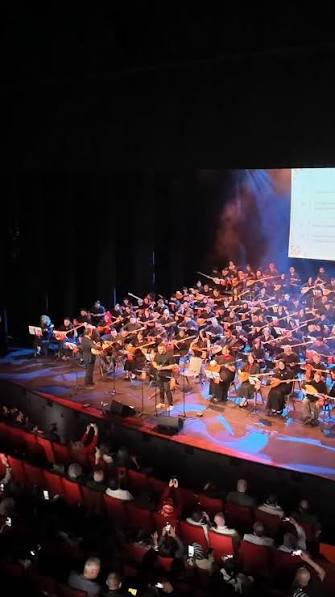
The bağlama (saz) is the most widely played instrument in Turkey and one of the most widely played among Turkish and Kurdish diaspora communities in Europe. In Rotterdam alone, hundreds of people play it: children learning from parents and grandparents, adults who have played since childhood, teachers running classes in community halls, young musicians exploring fusion and contemporary styles. This is not a fading tradition. It is alive and evolving, and Rotterdam has a significant community of players who have never had a festival that belongs to them.

The Repertoire

From Anatolian Folk to Contemporary Fusion

The bağlama carries the full breadth of Turkish and Kurdish musical heritage: Anatolian folk songs (türkü), classical Ottoman repertoire, Alevi spiritual music (semah), protest song traditions (Aşık Veysel, Pir Sultan Abdal), and contemporary compositions. Players in Rotterdam span all of these dimensions. The festival honours that breadth without collapsing it into a single identity.

The Community

Children, Adults, and Elders: Everyone Plays

Rotterdam's bağlama community crosses generations. Children learn at Stichting Saz Rotterdam and in private lessons. Adults play in informal circles. Elders carry the deepest knowledge of older repertoire and tuning systems. The festival is designed to reflect all of this: a youth showcase, a community workshop, a professional concert, and informal space for players at every level to meet and play together.

The Ambition

Rotterdam as the Bağlama Destination

In five years, the vision is for the Rotterdam Bağlama Festival to be known across the Netherlands and beyond as the place to come for bağlama: a festival that is genuinely rooted in a community, programmed by that community, and which treats this instrument with the same seriousness that jazz festivals treat jazz or chamber music festivals treat Beethoven. We start with one day. We build from there.

Potential future link: Conversations are underway to explore whether the Rotterdam festival can connect with or eventually host the Ud Festival Amsterdam, bringing maqam and bağlama traditions together in one Rotterdam weekend. This is a Year Two or Three conversation, not a Year One promise.

October 2026: Starting Small, Starting Right

The first edition is a pilot. One day. One venue. A programme that the community owns and is proud of. The measure of success is not audience numbers or press coverage: it is whether Mutlu, Emine, and the wider bağlama community in Rotterdam feel this was theirs.

Why October 2026: Autumn timing avoids competition with summer festivals, gives the bağlama community visibility in the cultural season, and allows the spring and summer for preparation, funding, and community relationship-building. It also positions the festival before the winter conservatoire programming season, making it visible to Codarts students and faculty as part of the academic year.

What the Festival Is

  • Evening concert: solo bağlama and small ensemble, led by Mutlu Kizilgedik
  • Youth showcase: children's and youth choir and ensemble, Stichting Saz Rotterdam
  • Open workshop: bağlama for beginners and intermediates, open to all
  • Instrument exhibition: Saz Shop Rotterdam (Ilker Delener), instruments on display all day
  • Set by Saz Academy Amsterdam (Umit): cross-city connection
  • Community conversation: the saz in Rotterdam, honest and informal

Why WMDC

The World Music and Dance Centre (WMDC) has acoustic quality, stage capacity, and backstage facilities for a professional event. As Codarts territory, in-kind support (technical staff, stage, lighting, sound) is straightforward. In later years the festival may move or expand to other venues as it grows into the city. Year One is about quality, not size.

Keep It Small

A successful small festival is worth infinitely more than an over-ambitious one that the community does not own. Year One: one day, one stage, one rehearsal room for the workshop, the foyer for the exhibition. That is enough.

Rotterdam's Bağlama Community Leaders

Mutlu Kizilgedik

Backbone Figure, Bağlama Festival

Mutlu Kizilgedik

Rotterdam-based bağlama teacher and musician. Mutlu is one of the central figures in Rotterdam's Turkish and Kurdish music community, with deep roots in the tradition and extensive teaching experience. His community relationships and artistic credibility are essential to the festival having genuine local ownership. The festival does not happen without his involvement and leadership.

Emine Tokali

Backbone Figure, Bağlama Festival

Emine Tokali

Rotterdam-based vocalist and educator working deeply within the Turkish and Kurdish musical tradition. Emine is not a bağlama player: she is a singer and teacher whose art lives in the voice. Her knowledge of the repertoire, her community relationships, and her pedagogical experience are indispensable to making this festival what it should be. She and Mutlu represent complementary dimensions of the same living tradition.

Important

The festival is not designed by Codarts for the community. Mutlu and Emine are co-designers and decision-makers. Codarts provides infrastructure, not artistic leadership. This distinction is non-negotiable.

Saz Organisations and Connections

Amsterdam

The Saz Academy Amsterdam

"Teaching the Saz and sharing a living tradition." Led by Umit, the Saz Academy is the leading institution for bağlama teaching in the Netherlands. They offer individual and group lessons, community workshops, and are deeply connected to Amsterdam's Turkish and Kurdish communities. Their partnership brings credibility and cross-city reach to the Rotterdam festival.

thesazacademy.com

Rotterdam

Saz Shop Rotterdam / Ilker Delener

Ilker Delener runs a community instrument shop in Rotterdam focused on bağlama and related instruments. Musicians come through for instrument repairs, purchases, and conversation. The Saz Shop is a grassroots node that no institutional map would show, but every bağlama player in Rotterdam knows. His involvement grounds the festival in daily community life.

Stichting Saz Rotterdam

Rotterdam

Stichting Saz Rotterdam

"Muzik Bizim Isimiz" (Music Is Our Business). An existing Rotterdam Stichting running children's choir, youth choir, bağlama lessons, and instrument sales at Frits Ruysstraat 38d. They are the community infrastructure already on the ground. The youth choir and children's choir are natural participants in a festival programme, and their Stichting status makes them a potential governance partner for community grant applications.

Frits Ruysstraat 38d, Rotterdam

Year One Programme (Draft)

ElementFormatLeadVenueNotes
Opening ConcertEvening, 90 minMutlu Kizilgedik + Emine TokaliWMDC Main StageTicketed. Rotterdam premiere quality.
Saz Academy AmsterdamSet, 45 minUmit / Saz AcademyWMDC Main StageCross-city link, travel budget required
Youth ShowcasePerformance, 30 minStichting Saz RotterdamWMDC StudioChildren's and youth choir. Free entry.
Open WorkshopWorkshop, 2 hrsMutlu KizilgedikWMDC Rehearsal RoomOpen to public, beginners welcome
Instrument ExhibitionDisplay, all dayIlker Delener / Saz ShopWMDC FoyerDisplay and demonstration of instruments
Panel: Saz in DiasporaDiscussion, 75 minCodarts + CommunityWMDC StudioHonest conversation, not a celebration
Ud Festival link eventTBCAmsterdam Ud FestivalTBCExploratory conversation stage

Year One scope: One day, one venue, modest production. The priority is quality of relationships, not scale of event. If the community owns it and artists are proud to be there, year two builds naturally. The festival documentation, attendance figures, and community engagement also form the core of the evidence base for the Erasmus+ BIP 1 application: a successful Bağlama Festival in October 2026 is the strongest argument we can make to European partners that Rotterdam is a serious and ready host.

What a 1-Day Pilot Festival Costs

These are indicative figures for planning and fundraising purposes. The in-kind contribution of WMDC (venue, technical staff, basic equipment) significantly reduces cash requirements. A conservative first-year cash budget is achievable through a combination of Fonds Podiumkunsten, Stichting grants, and ticket revenue.

Cost CategoryIndicative AmountNotesIn-Kind Possible?
Venue (WMDC)EUR 0 to 500In-kind via Codarts; small operational cost onlyYes, primary in-kind
Technical (sound, lighting, stage)EUR 800 to 1,500WMDC technical staff; minimal extra hirePartial in-kind
Artist fees: Mutlu KizilgedikEUR 500 to 800Fair pay. Not negotiable.No
Artist fees: Emine TokaliEUR 300 to 500Fair pay. Not negotiable.No
Saz Academy Amsterdam (travel + fee)EUR 400 to 700Travel from Amsterdam, small performance feeNo
Workshop facilitationEUR 200 to 400Mutlu / community teacherNo
Stichting Saz Rotterdam (youth programme)EUR 0 to 200Community contribution; minimal additional costPartial
Marketing and communicationsEUR 300 to 600Social media, print, community outreachPartial (Codarts comms)
Photography / documentationEUR 200 to 400Essential for future funding applicationsPartial (student)
Catering / hospitalityEUR 300 to 500Community gathering, artists, staffPartial
Contingency (10%)EUR 300 to 500Always budget a bufferNo

Total Estimated Cash Budget

EUR 3,600 to 6,600

Conservative to mid-range estimate for a genuine, well-produced 1-day festival. The WMDC in-kind support reduces this significantly from what an equivalent external venue would cost.

Codarts in-kind (venue + tech + staff) estimated value: EUR 2,000 to 4,000

How to Cover It

Mixed Sources

Fonds Podiumkunsten (project grant for first event, typically EUR 2k to 8k for small debuts). Ticket revenue from evening concert (EUR 10 to 15 per ticket, 80 to 120 seats = EUR 800 to 1,800). Stichting first project application. Codarts third-mission budget contribution.

Lead time: apply 4 to 6 months before the festival date

Planning: Academic Year 2026-2027 and Beyond

The academic year is our natural planning unit: September to June, with summer for recovery and preparation. A phased approach built on patience, trust, and honest sequencing. The foundation takes time to get right, and that is the point.

Process Before Product

This is not a project plan with deliverables and deadlines. It is a process plan with relationships and learning at its core. We are not building an events calendar. We are building the conditions under which good things become possible. That requires patience, humility, and a willingness to move at the speed of trust.

Who Is in the Room

A small team from Codarts: currently Jan Kuhr (Head of Global Musics) and Mutlu Kizilgedik (Bağlama teacher and community connector). Not a department. Not a committee. Two people who are already in the community and already trusted. The team grows when the work earns it.

What "Slow" Actually Means

Slow means: one good conversation before signing anything. One pilot event before planning a series. One honest evaluation before applying for more funding. It means resisting the institutional urge to present outputs before relationships are ready. Speed now costs trust later.

How Decisions Get Made

Co-design, not consultation. Community partners are not asked for feedback on decisions already made. They are in the room when the decisions are being shaped. This takes longer. It is also the only way to build something the community will sustain after Codarts is no longer driving it.

The Institutional Temptation

Universities like to show results quickly. Funders want impact metrics. Management wants a clear plan. All of this creates pressure to move faster than the community relationships can bear. The planning below is deliberately measured, with more empty space than most project timelines would allow. That space is not waste. It is where the real work happens: in conversations, in shared meals, in informal sessions that do not appear in any grant report.

Year One: Laying the Ground

The academic year starts in September 2026. The Bağlama Festival in October is the first public milestone, not a year-end event. Each phase builds on the last: relationships before programming, pilots before scale, community trust before institutional announcements.

Phase 1: September to October 2026

The academic year begins. This is the most concentrated phase: the Bağlama Festival happens in October while the legal and relational foundations are being laid in parallel. Slow and focused.

Bağlama Festival: October 2026

  • Final programme confirmed with Mutlu Kizilgedik and Emine Tokali
  • Stichting Saz Rotterdam youth showcase confirmed
  • Saz Academy Amsterdam (Umit) confirmed for cross-city set
  • Saz Shop Rotterdam (Ilker Delener) instrument exhibition confirmed
  • Marketing and ticketing live at least four weeks before the event
  • Photography and documentation arranged: essential for all future funding applications

Stichting: First Steps

  • Internal conversations at Codarts about scope and mandate
  • Identify founding board: community leaders first, Codarts staff in advisory roles
  • Begin drafting statutes in dialogue with community partners
  • KVK (Chamber of Commerce) registration targeted by November
  • Basic governance documentation and bank account prepared

First Partnership Conversations

  • Informal listening meeting with Cultuur and Campus leadership
  • Introductory meeting with Orkest Partout
  • First contact with Fenix Museum programming team
  • No agreements, no MoUs yet: these are relationship-building conversations
  • Document who is interested and what they might contribute

Funding Calendar

  • Map all relevant funding streams and their application timelines
  • Confirm what Codarts can and cannot apply for directly
  • Identify which grants require the Stichting as lead applicant
  • Build a funding calendar for the full academic year
  • Begin preparing Fonds Podiumkunsten application for the 2027 festival

Phase 2: November 2026 to January 2027

The festival is done. Now we learn from it. This phase is about honest reflection, completing the legal infrastructure, and making the first funding applications while relationships are still fresh.

Festival Evaluation

  • Full evaluation meeting with all Bağlama Festival participants and partners
  • Community feedback gathered through conversations, not surveys
  • What worked? What should change in Year Two? What surprised us?
  • Short written reflection from community participants for funder reporting
  • Documentation package completed: photos, video, written record

Stichting Completion and First Applications

  • KVK registration completed if not finalised in Phase 1
  • Bank account opened, governance documents signed
  • Stichting submits first VSBfonds or Fonds Cultuurparticipatie application
  • Fonds Podiumkunsten application for the 2027 Bağlama Festival submitted
  • Prins Bernhard Cultuurfonds application prepared (accepts year-round)

Silja Europa: First Connection

  • First formal conversations with Orkest Partout about the Silja Europa pathway
  • Understand the community: who they are, what they already do musically
  • No performance or showcase yet: this is relationship-building only
  • Small informal session at Codarts if the community is ready

Community Co-Design Sessions

  • Series of co-design meetings: what does the community actually want from this?
  • Invite Stichting Saz Rotterdam, Culture Connection, EPM Holanda to the table
  • Listen before proposing anything. Document findings as a shared reference
  • Follow-up with Cultuur and Campus, Orkest Partout, Fenix Museum

Phase 3: February to April 2027

With the festival behind us and the Stichting operational, the second semester extends the work to new communities and begins preparing the European dimension with Erasmus+ partners.

Caribbean and South American Strand

  • Attend Rotterdam Unlimited planning meetings as observers: listen first
  • Visit Caribbean Ancestry Club events at WORM before approaching formally
  • First conversations with EPM Holanda about what they actually need
  • Map Rotterdam-Zuid communities and existing cultural infrastructure
  • Understand what is already happening before proposing anything new

Erasmus+ BIP 1: Partnership Development

  • Confirm partner HEIs for BIP 1 (Silk Roads and Maqam) via GLOMUS network
  • Draft programme outline with ITU MIAM Istanbul and Royal Academy Aarhus
  • Begin conversations with Irish World Academy of Music and Dance
  • Application target: September 2027 (start of next academic year)
  • This is preparation for October 2027 delivery

First Orkest Partout Joint Activity

  • One joint workshop or lab session at WMDC
  • Codarts students as co-participants, not observers
  • Small group, informal setting, honest debrief afterwards
  • First contact with musicians from the Silja Europa pathway if the community is ready

MoU Formalisation (Where Ready)

  • If Phase 1-2 conversations have matured: sign MoU with Cultuur and Campus
  • Only formalise where genuine shared vision exists, not just goodwill
  • Identify which partnerships need more time: respect the pace of trust
  • Update Codarts board on progress and honest assessment of what has changed

Phase 4: May to June 2027

End of the academic year. No new public events. This phase is for honest evaluation and careful planning of Year Two, so that September 2027 begins from a solid, shared foundation.

Full Academic Year Evaluation

  • Evaluation meeting with all active partners: what has the community experienced?
  • What grew? What stalled? What should stop and what should deepen?
  • Report for Codarts board: honest about what did not work as well as what did
  • Community feedback shapes Year Two priorities, not the other way round

Documentation and Funder Reporting

  • Complete all documentation for 2026-2027 funder reports
  • Stichting first annual report: keep it simple, honest, and human
  • Archive all photography and materials for future grant applications
  • No press release unless community partners want one

Year Two Planning

  • Draft 2027-2028 priorities based on evaluation findings
  • Identify which funding streams to target from September 2027
  • Confirm which partnerships are ready to formalise or deepen
  • Stichting board signs off on 2027-2028 work plan before summer
  • Confirm Bağlama Festival Year Two: build on what worked, change what did not

Erasmus+ BIP Preparation

  • Partner confirmations for BIP 1 in writing before the summer break
  • Programme details finalised with ITU MIAM Istanbul and GLOMUS partners
  • Application ready for submission in September 2027 at the start of Year Two
  • Begin early-stage conversations with ESMUC Barcelona for BIP 2 (2028-2029)

How This Grows: Academic Year 2027-2028 and Beyond

Each year builds on the year before. Nothing is assumed. The pace of growth follows the pace of community readiness, not institutional ambition.

Y2

Academic Year 2027-2028: From Pilots to Programme

The pilots that worked in 2026-2027 become Year Two programmes. The Stichting applies for its first Rotterdam Projectsubsidies Cultuur grant. Erasmus+ BIP 1 (Silk Roads and Maqam) is delivered in October 2027. The Caribbean and South American strand launches its first public activity. Community co-leadership grows: Codarts begins stepping back from driving decisions.

Y3

Academic Year 2028-2029: The Stichting Stands on Its Own

The Stichting has its own track record and begins attracting funding independently of Codarts. Erasmus+ BIP 2 (Diaspora Sounds) delivered October 2028. Rotterdam begins to be known for something specific in the European Global Musics landscape, not just as a city with a conservatoire. First community-initiated programming strand: an idea that came from the community, not from Codarts staff.

Y4

Academic Year 2029-2030: Rotterdam as a Reference Point

Other cities and institutions begin asking how Rotterdam built this. Codarts is visible as one partner in a larger ecosystem, not the institution that runs it. Community musicians from Rotterdam appear in European contexts as a direct result of the network. The model begins to influence how Codarts teaches, not just what it does outside the building.

Y5+

From 2030: Community Ownership

The Stichting operates with genuine independence. Codarts is one funder and one partner among many: not the lead, not the decision-maker. The community determines what the ecosystem prioritises. The small team that started this has grown into a broader network of people who own the work together. Rotterdam has something Amsterdam and The Hague do not have.

A note on this timeline: These years are indicative, not a schedule. What matters is that each stage is genuinely ready before the next begins. If 2027 reveals that the community is not yet ready for independent Stichting programming, then 2028 priorities shift accordingly. The timeline serves the process. The process does not serve the timeline.

Funding Strategy

Where the money comes from, what the constraints are, and how to build a sustainable mixed-income model over five years.

One Thing You Must Know Before Anything Else

Codarts Cannot Apply for Rotterdam Projectsubsidies Cultuur

As a structural subsidy recipient from the Dutch government, Codarts is excluded from applying for Rotterdam Projectsubsidies Cultuur. This funding stream (up to EUR 272k per round, six rounds per year) is specifically for independent organisations. The Stichting must be established and hold a track record before it can compete successfully for these grants.

This changes the Year One funding strategy significantly. In Year One, we rely on Codarts in-kind support, small external grants, and European funding. From Year Two onward, the Stichting unlocks a much larger funding landscape.

The Mixed-Income Model

Codarts In-Kind (Year One Primary)

In-Kind

WMDC venue, technical staff, rehearsal rooms, student hours (WIL placements), academic coordination, and marketing support. Estimated equivalent value: significant. This is what makes Year One events possible without large cash budgets.

Available from Year One

Erasmus+ (KA131 / BIP)

EUR 15k to 50k

For the Blended Intensive Programme "Rooting the Music." Covers student and staff mobility, workshop costs, and coordination. Requires three partner HEIs from three Erasmus+ programme countries. Application deadline: typically September.

Requires HEI partnership confirmation first

Fonds Podiumkunsten

EUR 5k to 30k per project

The Dutch national fund for performing arts. Supports both organisations and projects. Project grants are accessible for defined programmes like the Bağlama Festival. Codarts can apply as co-applicant with the Stichting as lead.

Stichting as lead applicant recommended

Prins Bernhard Cultuurfonds

EUR 2.5k to 20k

Private fund supporting culture and heritage. Particularly open to projects with community-heritage dimensions. The migration and diaspora framing of our work aligns well with their priorities. Applications accepted year-round.

Response within approximately 3 months

VSBfonds

EUR 5k to 50k

A major Dutch private fund supporting arts, culture, education, and social cohesion. Strong alignment with community music, youth participation, and intercultural projects. The Silja Europa and Stichting Saz Rotterdam strands are strong cases.

Focus on accessible arts and social inclusion

Fonds voor Cultuurparticipatie

EUR 5k to 75k

Supports participation in culture by underrepresented groups, community arts, and amateur music. The Bağlama Festival's workshop strand and the Stichting Saz Rotterdam youth choir are excellent fits.

Strong fit for youth and community strands

Rotterdam Projectsubsidies Cultuur (Year Two+)

Up to EUR 272k per round

Rotterdam gemeente project subsidies. Six rounds per year. Only available to independent organisations. Not available to Codarts directly. Target: first Stichting application in 2027.

Stichting required. Codarts cannot apply directly.

Ticketing and Workshop Fees

Variable

Evening concerts at WMDC can generate modest ticket income. Workshop fees on a sliding scale contribute to costs without excluding participation. Year One income is minimal but builds the track record funders want to see.

Sliding scale pricing essential for accessibility

When to Apply for What

FundAmount RangeApplicantTarget RoundPriority
Codarts In-KindIn-kind valueCodarts (internal)Phase 1 2026-2027 (internal approval)Urgent
Fonds PodiumkunstenEUR 5k to 20kStichting (lead)Phase 2 2026-2027 (after Bağlama Festival)High
VSBfondsEUR 10k to 30kStichtingPhase 2 2026-2027High
Fonds CultuurparticipatieEUR 5k to 25kStichtingPhase 2 2026-2027 (youth strand)Medium
Erasmus+ BIPEUR 15k to 50kCodarts (HEI)Sep 2026 (for 2026/27)Medium
Prins Bernhard CultuurfondsEUR 5k to 15kStichtingQ3 2026Medium
Rotterdam ProjectsubsidiesUp to EUR 272kStichting (only)2027 earliestYear 2+
Erasmus BIP
Erasmus+ Blended Intensive Programme

Two BIP Concepts
for Rotterdam

Two different approaches to a European intensive programme: one anchored in research and musical traditions along the Silk Roads, one rooted in diaspora community practice. Both host at Codarts Rotterdam. One for October 2027, one for October 2028.

Erasmus+ Blended Intensive Programme: The Basics

A Blended Intensive Programme (BIP) combines a short physical mobility period of at least five days with an online component. It involves students and staff from at least three higher education institutions in three different Erasmus+ programme countries. Individual student mobility grants cover travel, accommodation, and subsistence. Codarts, as the coordinating HEI, receives coordination funding and covers programme delivery costs with supplementary sources.

Minimum 5 Physical Days

The Rotterdam BIPs would each run for 6 to 7 days: workshops, community visits, artistic research sessions, and a public-facing final event at WMDC open to the city.

3+ HEIs from 3+ Countries

Codarts Rotterdam is the coordinating host. Each concept has a specific partner mix drawn from the GLOMUS network and confirmed Erasmus+ partner institutions.

Online Component

Before and after the physical intensive, participants engage online: preparatory seminars, shared reading, and a post-intensive reflection module that builds a lasting learning community.

GLOMUS: The Network Underneath

Both BIP concepts draw on the GLOMUS network (Global Network for Global Musics), co-founded by the Sibelius Academy (Finland) and the Royal Academy of Music Aarhus/Aalborg (Denmark). GLOMUS has 25+ partner institutions worldwide, with a strong European cluster. The network is built on exactly the principles that underpin this work: the authority of tradition-bearers, non-Western musical theory as theory, and Global Musics as a serious academic discipline rather than a supplementary option. The Nordic Master in Global Music (GLOMAS) is the flagship programme, involving Sibelius Academy, Royal Academy Aarhus, and Malmö Academy of Music. Codarts connecting to GLOMUS unlocks access to a ready-made European partner network with shared values.

"Silk Roads and Maqam: Living Traditions in Motion"

A research-focused BIP anchored in the musical traditions that travel the Silk Roads: maqam, modal theory, Bağlama and related instruments, classical urban musics from Istanbul, Cairo, and Beirut, and the way these traditions live in the communities of Rotterdam and its European counterparts. This BIP balances academic rigour with artistic practice.

Focus and Framing

This BIP asks: what does it mean to learn and teach a tradition that travels? Maqam is not one tradition but many: Turkish makam, Arabic maqam, Persian dastgah, Kurdish traditions, each with distinct theory, repertoire, and practice. Students from conservatoires across Europe engage with maqam as a living system, not a historical curiosity. Community musicians in Rotterdam are part of the teaching team, not guests. Research outputs (recordings, written reflections, joint presentations) contribute to participants' academic portfolios and to the growing body of English-language material on non-Western music theory.

The Academic and Artistic Balance

Each day combines practice sessions with structured research time. Students keep a reflective practice journal throughout. On Day 5, they present a short artistic research project: not a performance showcase but a genuine research presentation combining musical demonstration with critical reflection. Staff from all partner institutions give input on the presentations. This produces a transferable model that partners can use in their own teaching after the BIP.

DayFocusActivityPartners Involved
Day 1Arrival and FramingWelcome at WMDC. City orientation: visiting the Turkish and Arab neighbourhoods of Rotterdam. Shared meal with community musicians. Evening: informal session with Mutlu Kizilgedik and guests.Codarts, WMDC, community
Day 2Maqam: Theory as Living PracticeMorning: introduction to maqam theory (Turkish and Arabic perspectives) with Codarts faculty and ITU MIAM staff. Afternoon: practical workshop. Evening: listening session with guided analysis.Codarts, ITU MIAM Istanbul
Day 3Bağlama and Modal TraditionsMorning: Bağlama workshop with Mutlu Kizilgedik. Afternoon: visit Stichting Saz Rotterdam and community lesson observation. Evening: conversation about teaching tradition outside the country of origin.Mutlu Kizilgedik, Stichting Saz, GLOMUS partners
Day 4Diaspora, Migration and MusicVisit Fenix Museum of Migration (South Holland's major migration museum). Workshop with Culture Connection Arabic Crossroads programme. Reflection on displacement, memory, and musical transmission.Fenix Museum, Culture Connection
Day 5Artistic Research PresentationsStudent-led artistic research presentations (20 minutes each). Peer and staff feedback. Joint plenary: what does this week teach us about how to teach tradition?All partner staff and students
Day 6Public Event at WMDCOpen event at WMDC: short performances from each tradition studied, research sharing, and community response. Invited Rotterdam community audience. Informal gathering after.All partners, Rotterdam community, public

Turkey

ITU MIAM, Istanbul

Centre for Advanced Studies in Music at Istanbul Technical University. World-leading institution for maqam research and Turkish music education. Home to major ethnomusicology and composition departments. Bağlama teaching at conservatoire level. A natural anchor for the Silk Roads BIP.

Priority Partner, BIP 1

Denmark (GLOMUS Co-Founder)

Royal Academy of Music Aarhus/Aalborg

Co-founder of GLOMUS with Sibelius Academy. Home to the Nordic Master in Global Music (GLOMAS). Strong tradition in non-Western music pedagogy and research. An Erasmus+ programme country partner that brings network depth and shared values from day one.

Priority Partner, BIP 1

Ireland

Irish World Academy of Music and Dance

Part of the University of Limerick. One of Europe's most distinctive institutions for Global Musics and dance in a higher education context. Strong tradition in oral transmission, community music, and non-Western pedagogy. An ideal partner for the artistic research dimension of BIP 1.

Priority Partner, BIP 1

France

CNSMD Lyon

Conservatoire National Supérieur de Musique et de Danse de Lyon. Strong ethnomusicology department and intercultural music programmes. France's significant North African and Middle Eastern diaspora gives CNSMD staff direct relevance to the BIP's themes.

Additional Partner, BIP 1

Sweden (GLOMUS)

Malmö Academy of Music

Part of Lund University, and a GLOMAS partner. Malmö has a large Middle Eastern diaspora and its music academy has built genuine expertise in working with community musicians. Can contribute to BIP 1 or serve as an anchor for BIP 2.

Possible Addition, BIP 1 or 2

"Diaspora Sounds: Music, Memory and Community"

A practice-focused BIP grounded in how diaspora communities in European cities carry, adapt, and transmit their musical traditions. Where BIP 1 is anchored in a specific musical tradition (maqam and Silk Roads), BIP 2 is anchored in a shared experience: what happens when music travels across an ocean, across generations, across the border between heritage and innovation?

Focus and Framing

This BIP takes Rotterdam's Caribbean, Surinamese, Turkish, Kurdish, and other diaspora communities as its living curriculum. Students spend time embedded in community music spaces: not as observers with notebooks, but as learners with respect. Each student brings their own tradition, and the BIP asks them to practise listening across traditions. The final output is not a concert but a shared inquiry: what has each participant learned about their own tradition by encountering someone else's?

The Practical and Community-Centred Balance

BIP 2 is more action-oriented than BIP 1. Students spend more time in community settings and less time in classrooms. Community musicians are co-designers of the programme, not suppliers of content. Partner institutions bring experience of community music practice in their own cities: Antwerp's multicultural music scene, Tallinn's approach to oral tradition, Barcelona's Global Musics infrastructure. Each partner's context enriches the comparison.

DayFocusActivityPartners Involved
Day 1Arrival: Rotterdam as Case StudyWelcome and city tour focused on diaspora music geography: Rotterdam-Zuid, West-Kruiskade, WMDC. Participants map their own tradition to the city.Codarts, community guides
Day 2Surinamese and Antillean TraditionsMorning: deep dive into Kaseko, Kawina, and Tumba with community musicians. Afternoon: visit WORM Caribbean Ancestry Club. Evening: Dande circle (Bonaire community, if timing permits).EPM Holanda, WORM, community musicians
Day 3Turkish and Kurdish CommunitiesMorning: workshop at Stichting Saz Rotterdam with young players. Afternoon: co-workshop with Orkest Partout (cross-community music-making). Evening: open session at WMDC.Stichting Saz, Orkest Partout, Mutlu Kizilgedik
Day 4Community Music and PedagogyVisits to two community music schools or organisations. Structured conversations with community teachers about how they transmit tradition. Joint reflection session: what can conservatoires learn from community schools?Cultuur and Campus, partner institution staff
Day 5Practice and Co-CreationSmall cross-tradition groups create a short joint musical piece. Not a performance but a documented experiment. Evening: sharing of outcomes with community partners present.All participants, community partners
Day 6Public and Community EventOpen event at WMDC co-hosted with Rotterdam community partners. Community audience invited. Students present their BIP reflections alongside community musicians. Informal celebration.All partners, Rotterdam community, public

Belgium (GLOMUS)

Royal Conservatoire Antwerp

Strong Global Musics department and Erasmus+ experience. Antwerp and Rotterdam share similar port-city, multicultural demographics. The Conservatoire's Muziekcentrum and community music programmes make it a natural fit for the diaspora BIP framing.

Priority Partner, BIP 2

Spain

ESMUC Barcelona

Escola Superior de Música de Catalunya. Strong Global Musics and traditional music specialisations, with expertise in Arabic Andalusian music and Latin American traditions. An Erasmus+ programme country partner well-aligned with BIP 2's community focus. Barcelona's large Latin American diaspora mirrors aspects of Rotterdam's.

Priority Partner, BIP 2

Estonia (GLOMUS)

Estonian Academy of Music and Theatre

A GLOMUS partner with strong folk music and ethnomusicology traditions. Estonia's approach to indigenous and folk tradition transmission has much to offer a diaspora-focused BIP. The contrast between tradition-in-place (Estonia) and tradition-in-migration (Rotterdam) generates productive reflection.

Priority Partner, BIP 2

Sweden (GLOMUS)

Malmö Academy of Music

Lund University's music academy in Malmö, a city with significant Middle Eastern and Somali diaspora communities. GLOMAS partner. Malmö's experience integrating community musicians into conservatoire education is directly relevant to BIP 2's community-centred framing.

Priority Partner, BIP 2

Denmark (GLOMUS Co-Founder)

Royal Academy of Music Aarhus/Aalborg

Co-founder of GLOMUS. Can participate in both BIP concepts given the breadth of their Global Musics programme. For BIP 2, their experience of community engagement in Danish multicultural contexts is particularly relevant.

Possible Addition, BIP 2

Norway (GLOMUS)

Oslo National Academy of the Arts

A GLOMUS partner with strong ethnomusicology and folk music traditions. Norway's experience engaging with Sami and minority music traditions offers a different model of "tradition in its own context" that enriches BIP 2's comparative framework.

Possible Addition, BIP 2

The Values That Run Through Both Concepts

Community Musicians as Teachers

In both BIPs, community-based musicians and tradition-bearers are not guest speakers. They are members of the teaching team with equal authority to conservatoire-based academics. This is not cosmetic. It shapes the entire programme design: what counts as knowledge, who holds it, and how it is passed on.

Rotterdam as the Classroom

The city is not a backdrop. It is the curriculum. The communities of Rotterdam carry traditions that no library or archive can fully represent. Participants spend time in the city, with the community, before spending time in the building. This order matters.

Research That Goes Back

Both BIPs produce outputs: recordings, reflective writing, artistic research presentations. These are shared with community partners after the programme, not filed away in institutional repositories. The community should see what was learned from them.

GLOMUS as the Connective Tissue

Both BIPs draw on the GLOMUS network as a shared values framework. Codarts joining GLOMUS would give permanent access to this partner pool, reducing the administrative overhead of building partnerships from scratch each cycle and connecting us to 25+ institutions globally.

Timing: 2027 or 2028?

BIP 1 (Silk Roads and Maqam) is proposed for October 2027, requiring a Erasmus+ application submission in autumn 2026 after the Bağlama Festival pilot gives Codarts a track record and confirmed community partnerships. BIP 2 (Diaspora Sounds) follows in October 2028, giving time to deepen the Caribbean and South American strand relationships established in 2026 and 2027. Running both in the same year is not recommended: each BIP needs full attention from a small team. Sequencing them a year apart ensures quality.

Caribbean and South American music
Caribbean and South American Musics

Not an "Other":
Central to Who Rotterdam Is

The Surinamese, Antillean, Aruban, Brazilian, and Cuban communities of Rotterdam do not carry "other" music. They carry the music of this city. Kaseko, Tumba, Kawina, Samba, Son, and the Hindustani traditions of Suriname are as much Rotterdam's soundtrack as anything else.

Colonial History Is Not Background. It Is the Foundation.

Understanding why Caribbean and Surinamese communities are in Rotterdam requires understanding Dutch colonial history. This is not a digression. It is the reason these traditions are here, the reason they have sometimes been marginalised, and the reason Codarts has a particular responsibility to engage with them well.

Suriname: 308 Years as a Dutch Colony

Suriname was under Dutch colonial rule from 1667 to 1975. For 308 years, the Dutch extracted labour, resources, and human lives from that territory. Enslaved Africans were brought to work Suriname's plantations; after abolition in 1863, indentured workers came from India (bringing Hindustani traditions) and Java (bringing Javanese music). The music of Suriname is inseparable from this layered, violent, and complex history. When Surinamese communities in Rotterdam play Kaseko, Kawina, or Baithak Gana, they are carrying a tradition that survived colonial suppression, forced migration, and cultural erasure. That survival is a form of resistance, and it deserves to be heard with that understanding.

The Antilles and the Kingdom Relation

The islands of Curacao, Aruba, Bonaire, Sint Maarten, Sint Eustatius, and Saba are part of the Kingdom of the Netherlands. Their residents are Dutch citizens. Yet when Antillean musicians bring Tumba, Dande, or Soca to Rotterdam, they are often treated as performing "Global Musics" rather than Dutch music. This is the contradiction that decolonial thinking names directly: citizenship without cultural belonging. The Afro-Caribbean specialisation at Codarts actively disrupts this by treating these traditions as central to what a Dutch conservatoire should teach, not as a curiosity appended to a European core.

Rotterdam did not become diverse. It has always been a port: a place where people and their musics arrive, survive, and take root. The city's cultural identity is the accumulation of those arrivals.

Kaseko, Kawina, and the Layered Musical World of Suriname

Afro-Surinamese

Kaseko: Suriname's Popular Music

Kaseko emerged in the 1930s from Kawina in Paramaribo, Suriname's capital. It is a synthesis: West African rhythmic structures, Afro-Caribbean percussion, European brass instruments (trumpet, trombone, saxophone), and later electric guitar and bass. The percussion engine is complex: the skratji drum (a snare-like lead drum) drives the rhythm, layered with other drums and percussion.

Kaseko is popular music in the deepest sense: it belongs to the street, the dance hall, and the community gathering. It evolved continuously through the 20th century, absorbing jazz, calypso, and later electronic sounds. Rotterdam's Surinamese community has kept it alive and evolving. It is not a museum piece. It is heard at parties, funerals, and celebrations today.

Skratji drumBrass ensembleAfro-Caribbean rhythmDance music

Afro-Surinamese (Ritual and Social)

Kawina: The Root Before Kaseko

Kawina predates Kaseko and connects more directly to West African ceremonial and social music. It uses percussion ensembles, call-and-response singing, and is deeply linked to the social and spiritual life of Afro-Surinamese communities. Kaseko grew from Kawina when European instruments entered the sound world; Kawina itself continued alongside it.

For a conservatoire, Kawina presents a particular pedagogical richness: it is primarily an oral tradition, it carries community function rather than stage function, and it requires understanding of social context to play well. Learning Kawina properly means learning to listen, to participate, and to understand what the music is for before asking what it sounds like. That is a conservatoire-level skill that notation alone cannot teach.

Oral traditionPercussion ensembleCall and responseCommunity function

Surinamese Hindustani

Baithak Gana and Chutney: Indentured History in Sound

When Indian indentured workers arrived in Suriname from 1873 onwards, they brought North Indian classical and folk music traditions. Over generations, these evolved into distinctly Surinamese forms: Baithak Gana (sitting song, derived from thumri and bhajan but transformed in the Surinamese context) and Chutney (a lively, often humorous social music). These are not Indian music. They are Surinamese music with Indian roots, shaped by 150 years of Caribbean life.

North Indian rootsSurinamese transformationHarmonium, dholakSocial and devotional

Surinamese Javanese

Javanese Music in the Surinamese Diaspora

Javanese workers arrived in Suriname from 1890, bringing gamelan traditions and Javanese song. The Surinamese Javanese community maintained and transformed these traditions across the Atlantic, creating a distinct tradition that neither Java nor the Netherlands has in quite the same form. Rotterdam has one of the world's only communities carrying this specific musical synthesis. That is extraordinary and largely invisible to institutions.

Gamelan traditionJavanese songAtlantic transformationUnique to diaspora

Tumba, Dande, and the Music of the Dutch Caribbean Islands

Curacao / Carnival

Tumba: The Sound of Curacao's Carnival

Tumba is the primary music of the Curacao Carnival (Karnaval), celebrated in February each year. It is a competitive music form: composers write new Tumba songs each year, they are performed at the Gran Marshe (grand market), and one is crowned Tumba winner. The music blends African rhythmic patterns, Latin brass arrangements, and Papiamento lyrics that carry social commentary, humour, and political critique. Tumba is serious music with a party exterior.

Rotterdam Unlimited, the city's major Caribbean carnival (since 1984, UNESCO Intangible Cultural Heritage since December 2023), draws heavily on Tumba and related traditions. The festival started in 1983 as an "Antillean Summer Carnival" for Curacao and Aruba students in Utrecht, moved to Rotterdam in 1984, and has grown into one of the largest Caribbean carnival events in Europe. It is not an import. It is Rotterdam's own tradition now.

Carnival musicPapiamento lyricsSocial commentaryUNESCO ICH 2023

Bonaire / New Year

Dande: The New Year Music of Bonaire

Dande is a Bonairean tradition in which groups of musicians travel door to door on New Year's Eve and New Year's Day, singing personalised songs to bring good luck and receive food and drink in return. It is communal, participatory, and deeply tied to place and community. In Rotterdam, small Dande groups continue this practice within the Bonairean community. It is the kind of tradition that never appears on a stage because it was never designed for one.

For Codarts, Dande represents the category of music that conservatoires most often miss: living traditions that exist in domestic and community space rather than concert space. Before any thought of staging or curriculum, the right question is: who does this music belong to, and what happens to it when it moves from doorstep to stage? That question must be asked with the Bonairean community, not on their behalf.

Door-to-door traditionNew Year ritualBonairean communityNon-stage music

South American Music in Rotterdam

Brazil

Beyond Samba: The Breadth of Brazilian Music

Rotterdam's Brazilian community is smaller than the Surinamese or Antillean communities but culturally active. Samba and Bossa Nova are the internationally recognised forms, but the Brazilian musical world is vastly broader: Forro (Northeast Brazilian accordion and percussion music), Axe (Afro-Brazilian popular music from Bahia), Maracatu (a percussion-driven Afro-Brazilian Carnival tradition with roots in African court music), and Candomble music (Afro-Brazilian spiritual music using atabaques and specific rhythmic patterns).

EPM Holanda is the key community connection for the Brazilian strand. Brazilian percussion traditions are among the most pedagogically studied in the world precisely because their rhythmic complexity, layering, and interlocking patterns offer deep theoretical insight. They are already taught in many European conservatoires. The question for Codarts is not whether to include them but how to do so with proper community grounding rather than institutional abstraction.

Samba / Bossa NovaForroMaracatuAfro-Brazilian percussion

Cuba

Son, Rumba, and the Cuban Musical Tree

The Cuban musical tradition is one of the most influential in the world precisely because of its position at the crossroads of African rhythmic traditions and European harmonic structures. Son Cubano (the root of much of what became salsa), Rumba (a percussion and dance tradition with three distinct forms: Yambu, Columbia, and Guaguanco), Cha-Cha-Cha, and Timba are all present in Rotterdam's Cuban and wider Latin community.

The Cuban community in Rotterdam is small but concentrated around specific social spaces. Salsa dance and music events are already part of the city's cultural life. Codarts' role here is not to create new Cuban music programming but to ask what academic and pedagogical support the existing community actually wants, and to offer the conservatoire's resources in response to that question.

Son CubanoRumba (3 forms)TimbaAfrican-European synthesis

Where These Communities Live and Gather

Rotterdam-Zuid and the West-Kruiskade

The largest concentrations of Surinamese and Antillean communities in Rotterdam are in Rotterdam-Zuid, particularly Charlois, Feijenoord, and IJsselmonde. Rotterdam-Zuid has long been the politically underfunded half of the city, separated from the centre by the Maas. Its cultural richness is inversely proportional to its institutional representation.

The West-Kruiskade, a street in the city centre running through the Middelland neighbourhood, is Rotterdam's Caribbean cultural artery. Caribbean grocery shops, Surinamese restaurants, hair salons, and informal gathering spots line the street. It is where community members find each other, where informal music happens, and where the social infrastructure for any formal programming must be rooted. A Codarts project that does not know the West-Kruiskade is starting in the wrong place.

Rotterdam Unlimited: The City's Caribbean Carnival

Rotterdam Unlimited (formerly Zomercarnaval) is the largest Caribbean carnival in continental Europe. It began in 1983 in Utrecht as an "Antillean Summer Carnival" organised by Curacao and Aruba students, moved to Rotterdam in 1984, and has grown into a week-long festival drawing hundreds of thousands of visitors each summer.

In December 2023, Rotterdam Unlimited was inscribed on UNESCO's Representative List of Intangible Cultural Heritage of Humanity. This is not a footnote: it means the international community has recognised this carnival as a living cultural heritage tradition worthy of protection and promotion. Codarts is in the city where this happens, and has no formal relationship with it yet. That is a significant missed opportunity and an obvious first conversation to have.

Since 1984 in Rotterdam UNESCO ICH December 2023

Caribbean Ancestry Club at WORM Rotterdam: Founded by Alfrida Martis (Bonaire) and Daudi Cijntje (Curacao), Caribbean Ancestry Club organises gatherings at WORM Rotterdam for ABCSSS (Aruba, Bonaire, Curacao, Sint Maarten, Sint Eustatius, Saba) island communities. Events combine poetry, live music, Antillean food, and intergenerational conversations. This is grassroots community-building at its most genuine, and it is exactly the kind of existing infrastructure Codarts should be in conversation with before designing any Caribbean programming.

Our Role in This Community's Musical Life

The Right Question

The question is not "how can Codarts programme Caribbean music?" The question is "what do Caribbean and South American communities in Rotterdam actually need from a conservatoire, and are we the right institution to provide it?" The answer to the second question might sometimes be no. That is a legitimate and honest answer, and it is better than building a programme that serves the institution more than the community.

Pedagogical Resource

Teaching Support and Curriculum

Codarts can offer teaching space, pedagogical frameworks, and academic recognition to community music teachers who are already doing the work. A bağlama teacher who has never been inside a conservatoire can teach at Codarts. The same must be true for Kaseko, Tumba, and Kawina tradition-bearers.

Platform

Venue and Visibility

WMDC is a professional venue that Caribbean communities currently do not have regular access to. Making it available for community concerts, rehearsals, and events is a concrete contribution Codarts can make without designing any programming at all. Offering the space is itself a form of partnership.

Research

Academic Documentation

Kawina, Dande, Baithak Gana, and Surinamese Javanese music are under-documented in academic literature. Codarts can support ethnomusicological research in partnership with community members, producing knowledge that belongs to the community first, and to the academic world second.

Who Is Already Working in This Space

OrganisationFocusRelationship to CodartsNext Step
Rotterdam Unlimited (Zomercarnaval)Caribbean Carnival, UNESCO ICH 2023No formal contact yetIntroductory meeting: what can Codarts offer?
Caribbean Ancestry Club (WORM)ABCSSS island community gathering (music, poetry, food)No formal contactAttend events first. Listen before approaching.
EPM HolandaLatin American community and eventsExisting contact, informalFormal introductory meeting: Phase 1 of academic year (Sep-Oct 2026)
DCA Rotterdam (Erasmus University)Dutch Caribbean diaspora studies and communityAcademic contact potentialResearch partnership conversation
SKVRCommunity music education (gap in Caribbean provision)Gap identifiedExplore joint Caribbean music workshop strand
Cultuur and CampusCross-community conveningFormal partnerAsk Cultuur and Campus to make introductions to Caribbean community leaders

Approach for 2026: This strand is the one where Codarts must be most patient and most humble. The communities have existed here for generations without needing the conservatoire. Our role is to ask what we can contribute, not to assume we know what they need. Phase 1 of the academic year (September to October 2026) means attending Rotterdam Unlimited planning meetings as observers, visiting Caribbean Ancestry Club events, and having genuine conversations with EPM Holanda. Programming comes later. Relationship comes first.

Rotterdam: Where the Work Happens

An interactive map of the venues, community organisations, and key locations that make up the Global Musics Rotterdam ecosystem. Click any marker to learn more. Zoom in on Rotterdam-Zuid and West-Kruiskade to see where the Caribbean and Turkish communities are rooted. The map shows both partner locations and culturally significant neighbourhoods.

Codarts / Core
Community Partners
Venues
Cultural Neighbourhoods

Education and Training

InstitutionTypeRelevanceStatus
Codarts University of the ArtsHBO ConservatoireHome institution, WMDC venue, Global Musics departmentCore
Erasmus University RotterdamResearch UniversityPotential research partnership, sociology of musicPotential
Rotterdam University of Applied SciencesHBOArts management, education, community work overlapPotential
SKVRMunicipal Music SchoolCommunity music education, gap in Caribbean provisionGap to Address
Codarts LyceumSecondary SchoolPre-professional music education, pathway for young community musiciansInternal

Where Music Can Happen

VenueTypeCapacityGlobal Musics Fit
WMDC (Codarts)Conservatoire venue200 to 400 main stagePrimary venue, in-kind access
Cultuur and CampusCommunity / educationFlexibleWorkshops, community events, smaller concerts
Fenix Museum of MigrationMuseumVarious spacesThematic fit: migration stories, diaspora arts
Grounds RotterdamCreative hubSmall to mediumInformal sessions, rehearsal, workshops
De DoelenConcert hall2200 main hallPresenter model, not community hub: wrong fit for early stage
Lantaren/VensterArts cinema and events200 to 300Potential for hybrid film/music events
Stichting Saz RotterdamCommunity spaceSmallGrassroots bağlama hub, Frits Ruysstraat 38d

Community and Cultural Organisations in Rotterdam

OrganisationCommunityRole in Network
Orkest PartoutCross-communityCommunity music workshops, Silja Europa connection, lab pilot lead
Culture ConnectionNorth Africa, Middle EastArabic Crossroads, Women's Voices, Sacred Songs programming
Stichting Saz RotterdamTurkish, KurdishBağlama teaching, children's and youth choir, instrument sales
EPM HolandaLatin AmericanBrazilian, Cuban, and broader LatAm community access
Fenix Museum of MigrationCross-community (migration focus)Diaspora memory, storytelling, joint programming
Cultuur and CampusCross-community (education)Convening, distribution, community access, event hosting
Saz Shop Rotterdam (Ilker Delener)Turkish, KurdishInstrument community hub, bağlama player network access
Silja Europa communityMixed (asylum seekers and refugees)Musicians via Orkest Partout pathway

Beyond Rotterdam

OrganisationLocationConnection
MAQAM CentreAmsterdamModel institution, Yassine contact, potential co-programming
Andalus OrkestAmsterdamArabic orchestral tradition, cross-city collaboration
The Saz Academy AmsterdamAmsterdamBağlama teaching, Umit contact, festival partner
Ud Festival AmsterdamAmsterdamPotential Rotterdam co-hosting in Year Two
Meervaart TheatreAmsterdamGlobal Musics programming model, Yassine contact
ASLAN AmsterdamAmsterdamMusic school offering professional music education for newcomers and migrants: direct precedent for the Silja Europa model
De CentraleGhentCommunity co-ownership model: long-term inspiration
Fonds PodiumkunstenThe HaguePrimary national funder for performing arts projects

What Codarts Brings to the Table

Space

WMDC

Professional stage, rehearsal rooms, technical equipment, foyer space for exhibitions and informal events.

People

Students

International student body from across Global Musics regions. WIL hours available for community projects.

Expertise

Faculty

Specialist teachers in maqam, oud, bağlama, and Afro-Caribbean traditions. Academic credibility for funding applications.

Mandate

Third Mission (WHW)

Legal and strategic obligation to engage with society beyond enrolled students. Community work is part of our institutional purpose, not an add-on.